
Key facts: Sewage Cleanup
- Sewage is Category 3 water under the IICRC S500 approach, and porous materials it soaks are generally removed [1].
- Floodwater and sewage can carry germs that cause illness; CDC advises protective gear and thorough handwashing during cleanup [2].
- In Texas, plumbing repairs to drains and sewer lines are done by plumbers licensed by the Texas State Board of Plumbing Examiners [3].
- OSHA lists biological hazards among the main risks for workers cleaning up after floods and sewage [4].
The basics
What makes sewage different
A pipe that bursts behind the washer sends clean water across the floor. A sewer backup sends wastewater from every fixture in the house, and sometimes from the street, up through the lowest drain. That water contains human waste and the germs that come with it. Restorers classify it as Category 3, the most serious class, and treat every surface it touched as contaminated until it has been cleaned and disinfected [1].
The practical result is that far less can be saved. Carpet and pad, drywall below the wet line, insulation, upholstered furniture and anything else that absorbed the water are bagged and removed. Hard surfaces are scrubbed and disinfected. Drying happens only after the cleaning, so that no contamination is sealed into the walls.
Warning signs
Signs of a sewage problem
Water rising in the shower or tub
When you flush a toilet or run the washer and water comes up in the lowest shower or tub, the main drain is likely blocked.
Gurgling drains
Bubbling or gurgling from sinks and toilets when other fixtures run can be an early sign of a partial blockage.
Several fixtures slow at once
One slow sink is a local clog. Every drain in the house slowing together points to the main line.
Sewer smell indoors
A strong sewage odor can mean a dry trap, a failed wax ring or a leak in the drain system.
Wet floor around a toilet base
Water seeping from under a toilet may be a failed seal, letting wastewater soak the subfloor or slab.
Soggy patch in the yard
A wet, smelly spot over the sewer line outside can mean a break that will eventually back up indoors.
Causes
Why sewer lines back up in Mansfield homes
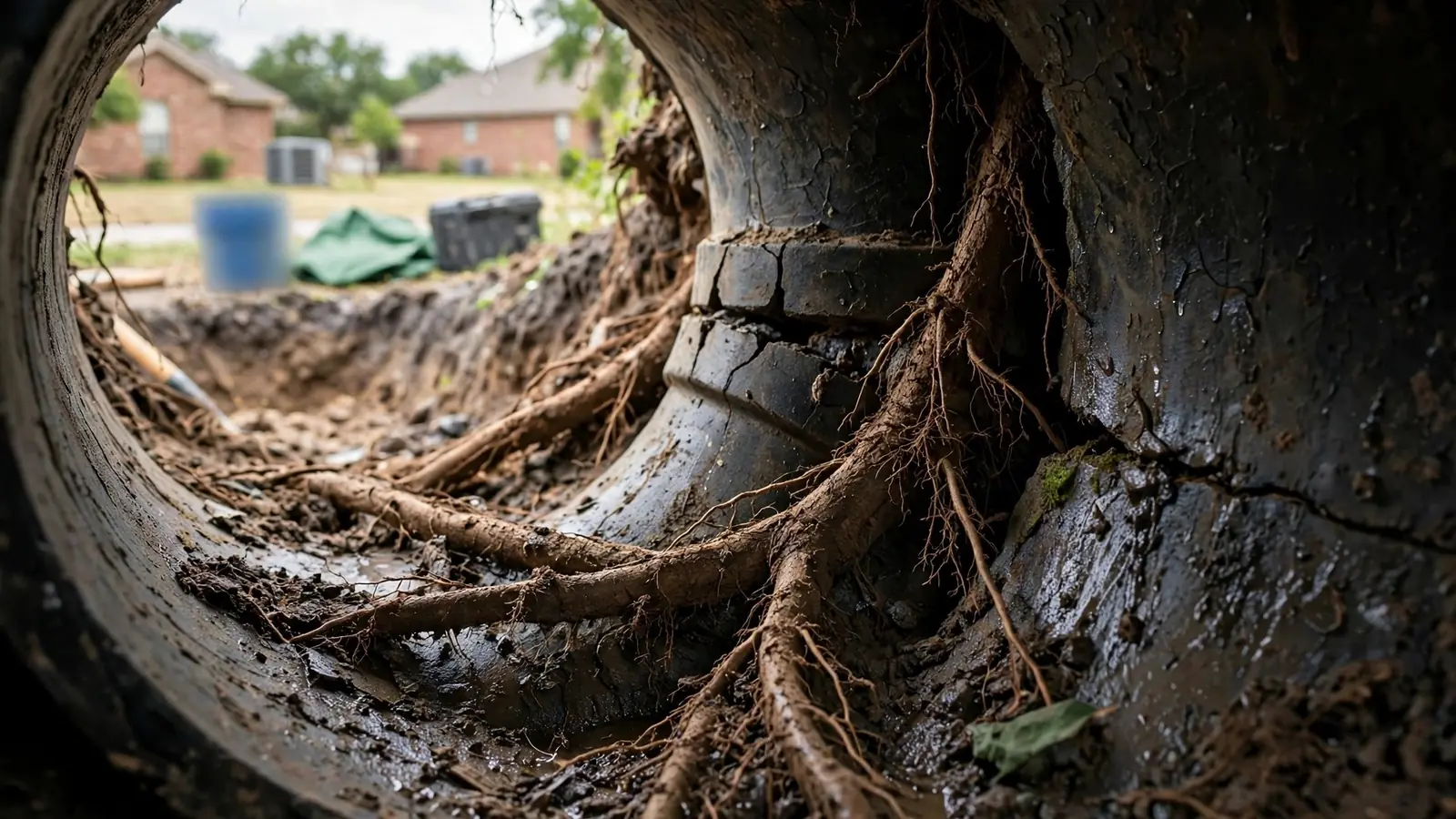
Tree roots are a common cause. Roots find their way into joints in older clay or cast-iron sewer lines and grow into a mat that catches paper and grease. Homes near mature trees, including in older parts of Mansfield, are more prone to this.
Grease and wipes are the other big culprits. Cooking grease poured down a kitchen drain cools and sticks to the pipe walls. So-called flushable wipes do not break down like toilet paper and can snag on roots or joints, building a blockage over weeks.
Ground movement plays a part in North Texas. Expansive clay soils swell and shrink with rain and drought, which can shift buried pipes, crack them or create low spots where waste collects. Heavy rain can also overload municipal systems and push water back toward homes.
Testing
How a sewage backup is assessed
- 1
Make sure the line is cleared
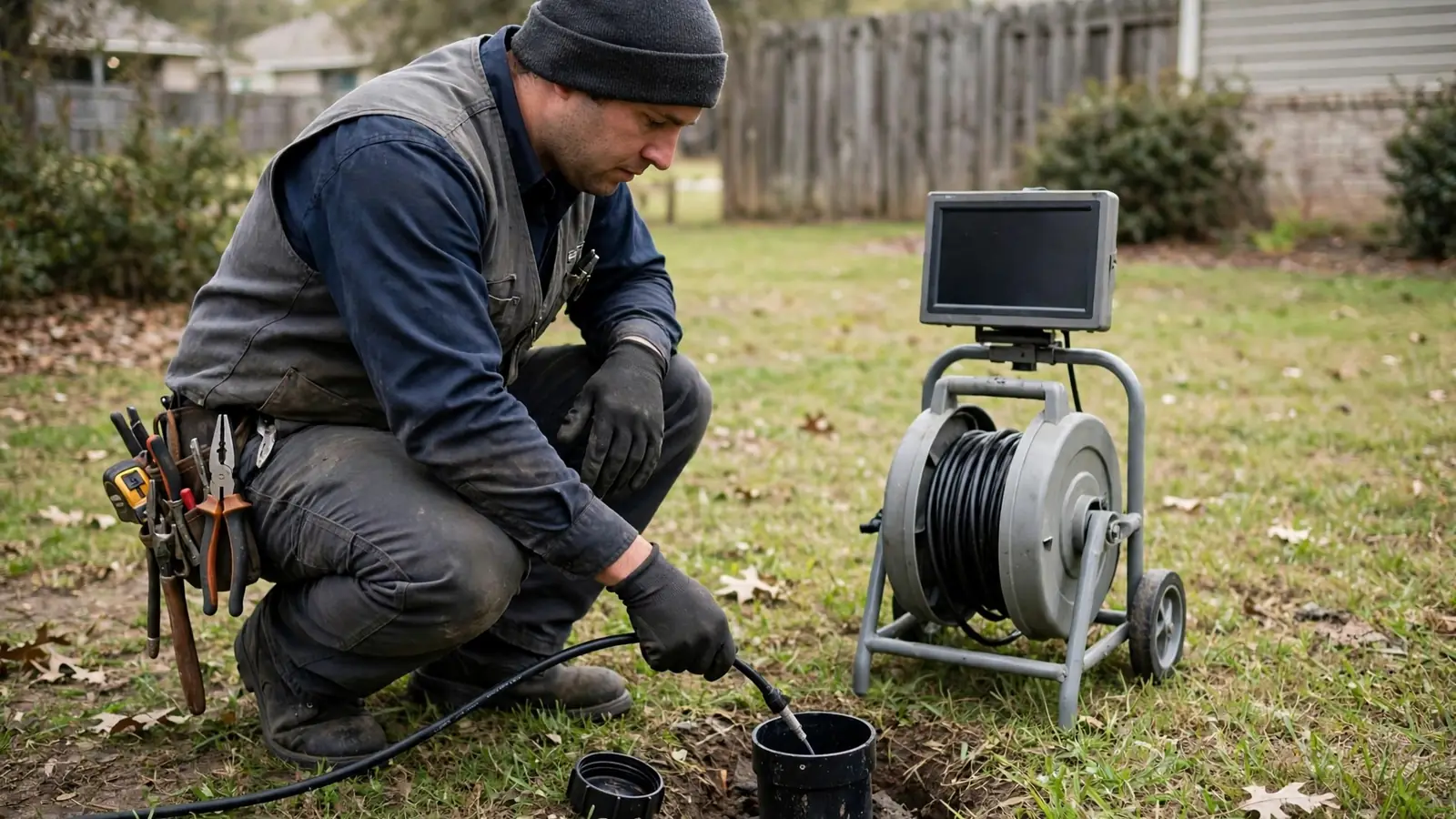
Cleanup cannot start while the drain is still blocked. A licensed plumber clears and inspects the line, often with a camera [3].
- 2
Check safety hazards
Electrical risks, slippery floors and any chemical smells are dealt with before work begins.
- 3
Map the contamination
The contractor traces how far sewage spread across floors and into adjoining rooms and walls, using meters and visual checks.
- 4
Identify affected materials
Each porous material the water touched is listed for removal; hard surfaces are listed for cleaning.
- 5
Photograph and record
Photos and notes document the source, the extent and the damaged contents for your insurance claim.
- 6
Explain the plan
You hear what will be removed, how containment will work and what you can expect each day.
Diagnosis
What sewage cleanup usually removes or cleans
The guiding rule: if it absorbed sewage and cannot be cleaned through, it goes.
| Material | Usual outcome | Why |
|---|---|---|
| Carpet and pad | Removed | Cannot be reliably disinfected after soaking |
| Drywall below the wet line | Cut out | Paper and gypsum absorb contamination |
| Insulation | Removed | Holds contaminated water |
| Vinyl and tile floors | Cleaned and disinfected, or removed if water got underneath | Surface can be cleaned; trapped water underneath cannot |
| Cabinet bases | Cleaned if solid; replaced if particleboard is swollen | Swollen board absorbs and holds contamination |
| Toilets and fixtures | Cleaned and disinfected | Hard surfaces respond well to cleaning |
| Clothing and fabrics | Hot-washed if the material allows, otherwise discarded | Laundering can remove contamination from washable items |
The job
How sewage cleanup is done
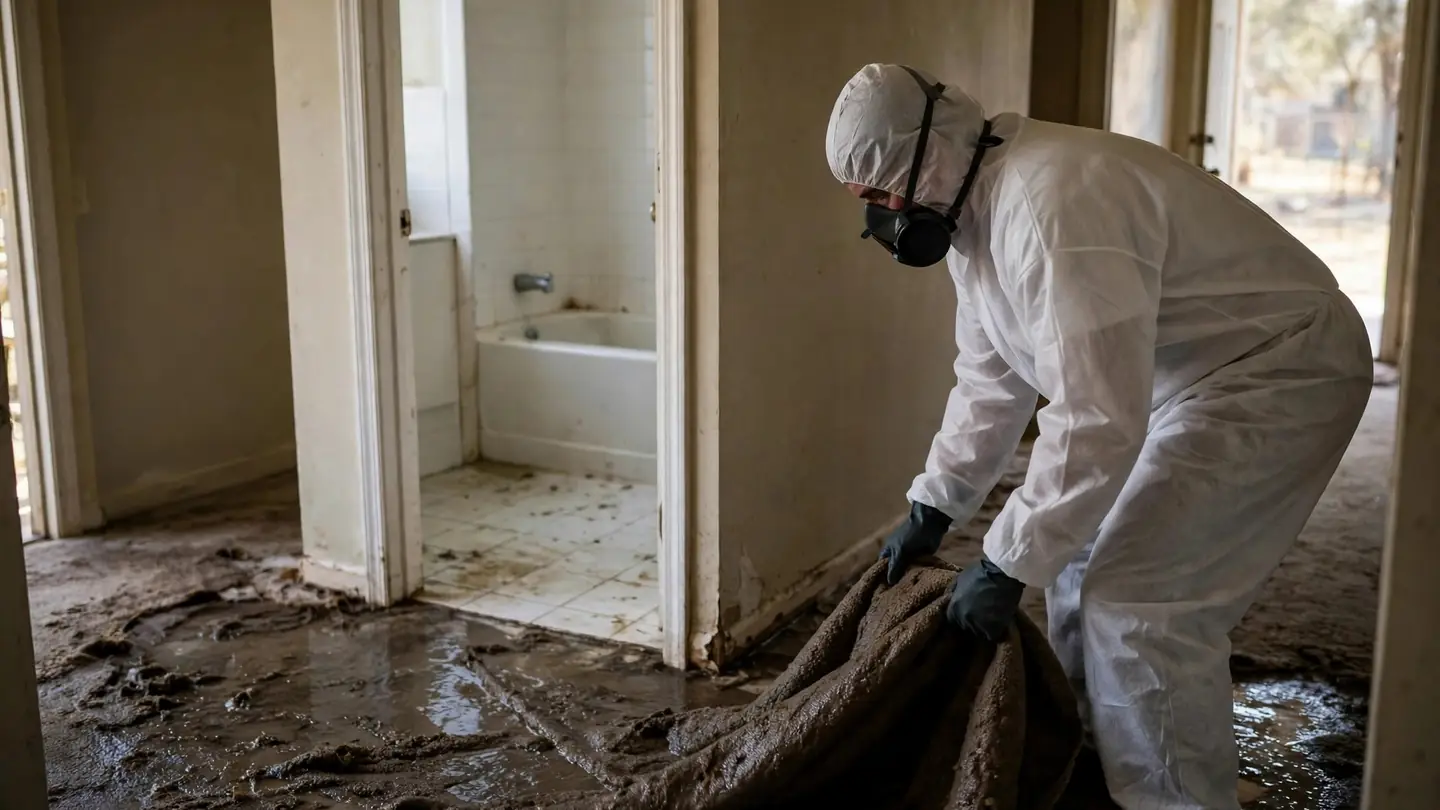
Workers put on protective gear before they go in: waterproof gloves, boots, eye protection and a respirator rated for the job, often with disposable suits. The affected area is closed off with plastic sheeting, and air scrubbers with HEPA filters run to keep contaminated particles from spreading through the house.
Bulk waste and standing water are removed first, using pumps and extractors that discharge into the sanitary sewer or into sealed containers. Then contaminated materials are cut out and bagged inside the containment area, so they are not carried through clean rooms.
Once the room is down to hard surfaces, cleaning starts. Floors, studs, the slab and fixtures are scrubbed with detergent to remove soil and organic matter, then treated with a disinfectant suited to the surface. Disinfectants work only on clean surfaces, which is why scrubbing comes first.
Drying follows, with the same measured approach used for any water loss. Final checks look for remaining odor and confirm that readings have reached the dry standard before rebuilding.
Comparison
Small overflow versus main line backup
| Question | Single toilet overflow | Main sewer line backup |
|---|---|---|
| Where it shows up | One bathroom | Lowest drains: showers, tubs, floor drains |
| How much water | Usually limited | Can continue as long as water is used |
| Plumber needed? | Sometimes only a plunger or auger | Almost always, to clear and inspect the line |
| Spread | Bathroom floor and nearby hallway | Can reach several rooms on the ground floor |
| Cleanup approach | Category 3 protocols in a small area | Category 3 protocols, containment, larger removal |
DIY vs pro
What you can do and what to avoid
With a small toilet overflow of urine and paper, many homeowners clean up themselves with gloves, disinfectant and good ventilation, then wash hands and clothing thoroughly. Once sewage reaches carpet, soaks into drywall or spreads beyond the bathroom, cleanup is best left to someone with the gear and process to do it safely.
Avoid using a household vacuum, mixing cleaning products, or walking through the affected area and then into other rooms. Bleach mixed with ammonia-based cleaners releases toxic gas. Shoes carry contamination far from the source, so leave them at the door of the affected area.
If anyone in the house has a weakened immune system, is pregnant, very young or elderly, keep them away from the cleanup entirely and consider staying elsewhere until the area has been cleaned and disinfected [2].
The visit
A sewage cleanup visit, step by step
- 1
Your call
You describe what is happening and arrange the visit with the contractor on the call.
- 2
Line cleared
A plumber clears the blockage, or the contractor confirms it has already been done.
- 3
Containment and gear
The work area is sealed off and air scrubbers start before removal.
- 4
Removal
Contaminated materials and contents are bagged and taken out through the shortest route.
- 5
Cleaning and disinfection
Every hard surface is scrubbed, then disinfected.
- 6
Drying and checks
Drying equipment runs until readings are normal, and the area is checked for odor before rebuilding.
Mansfield specifics
Sewage concerns specific to Mansfield
Mansfield's older neighborhoods around downtown have houses with drain lines that have been in the ground for decades, where roots and settling are more likely. Newer subdivisions use plastic pipe, which resists roots but can still sag if the clay soil underneath moves.
Most homes here are on slabs, so the main drain runs under the floor and exits toward the street. When it backs up, the first fixture to overflow is usually the lowest shower or tub on the ground floor. In two-story homes, sewage from upstairs fixtures can add to the overflow below.
Heavy storms are another trigger. When rain gets into sanitary sewer lines through cracks or open cleanouts, the system can overload and push water back toward homes. Keep outdoor cleanout caps closed and intact so rainwater does not enter your line.
Prevention
Preventing the next backup
What goes down the drain matters most. Keep grease out of the kitchen sink, put wipes and paper towels in the trash and run a strainer in shower drains. If you have big trees near the sewer line, ask a plumber about a camera inspection every few years.
A backwater valve can stop sewage from the street entering your home during a municipal overload. Whether one makes sense depends on how your line is laid out and local plumbing code; ask a licensed plumber.
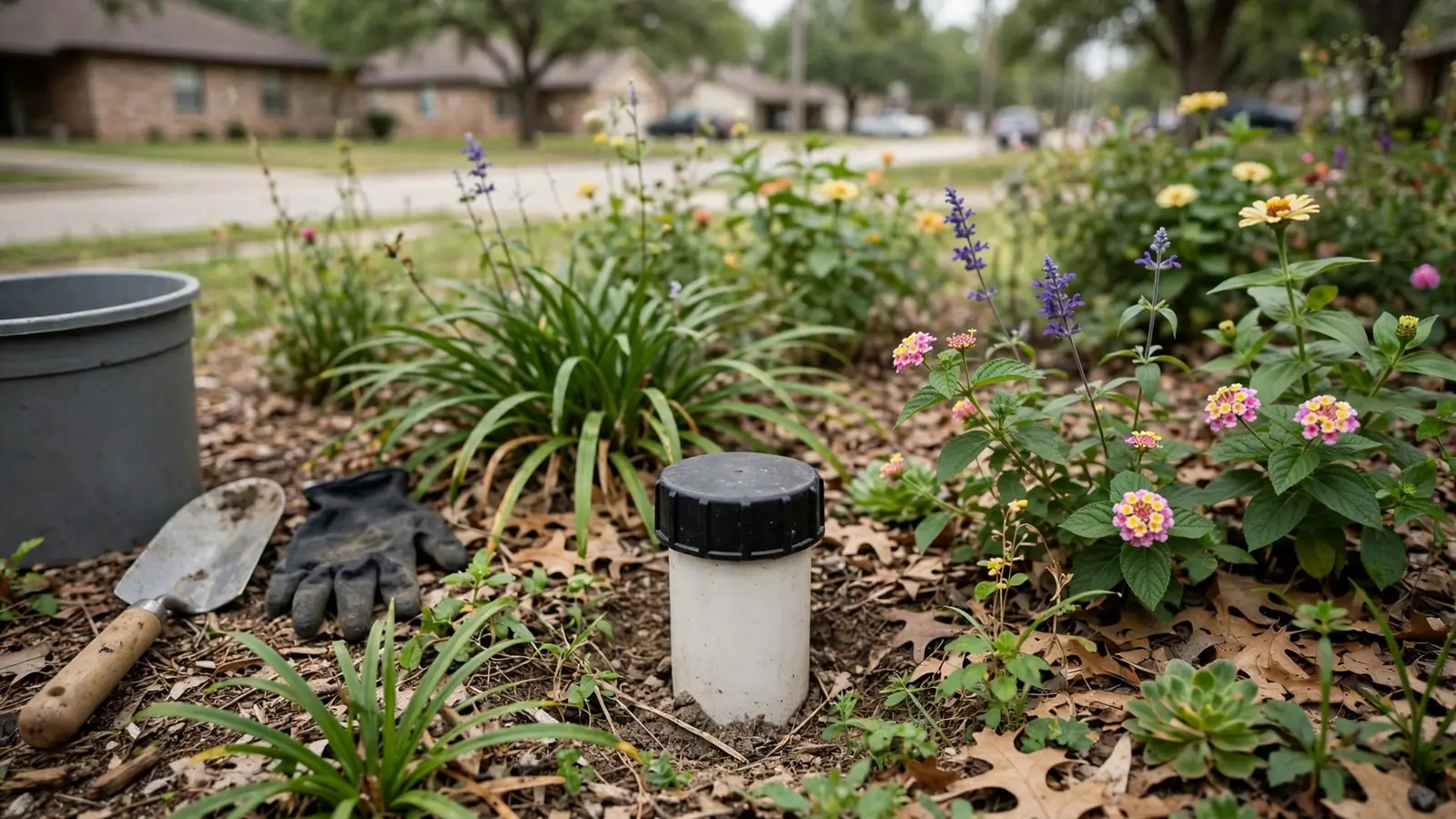
Know where your outdoor cleanout is. It is often a capped pipe in a flower bed near the front of the house, and it gives a plumber quick access during a blockage.
- Keep grease and wipes out of drains
- Schedule camera inspections near big trees
- Ask a plumber about a backwater valve
- Know where your cleanout is
Protection
Protective gear and why it is worn
OSHA and CDC guidance both stress protection during contact with sewage and floodwater [2][4].
| Gear | What it protects against |
|---|---|
| Waterproof gloves, often doubled | Direct skin contact with wastewater and contaminated materials |
| Rubber boots or boot covers | Walking through contaminated water and tracking it into clean areas |
| Eye protection or face shield | Splashes during extraction, cutting and scrubbing |
| Respirator suited to the task | Airborne droplets, dust and spores stirred up during removal |
| Disposable coveralls | Contamination on clothing that would otherwise leave the site |
Contents
Your belongings after a sewage backup
Contents get the same strict treatment as the building. Hard, non-porous items such as glass, ceramic, metal and sealed plastic can usually be cleaned and disinfected. Washable clothing, towels and bedding can often be laundered on a hot cycle if the fabric allows it. Rugs, mattresses, pillows, upholstered chairs, stuffed toys and paper goods that soaked up sewage are generally discarded.
Children's toys deserve special attention. Hard plastic toys can be cleaned and disinfected, but anything soft or with hidden cavities is safer to throw away. Before anything leaves the house, photograph it and add it to your contents list so it can be included in a claim.
Health
Health signs to watch for after cleanup
Most people who keep their distance and wash their hands never get sick from a household sewage backup. Still, exposure can cause stomach illness, skin infections in cuts and eye irritation. CDC advises keeping wounds covered and away from contaminated water and washing hands thoroughly before eating or touching your face [2].
If anyone in the household develops vomiting, diarrhea, fever or a red, swollen cut in the days after a backup, call a doctor and mention the sewage exposure.
Order of work
Why the order of work cannot be shortcut
Sewage cleanup follows a fixed sequence: stop the source, contain the area, remove contaminated material, clean, disinfect, dry and only then rebuild. Each step depends on the one before it. Drying before removal bakes contamination into the framing. Disinfecting before cleaning leaves the disinfectant fighting through a layer of soil, and it does not work well that way.
The same logic applies to the plumbing. A line that is cleared but not inspected may block again in a few weeks, undoing the cleanup. A camera inspection after clearing shows whether roots, a sag or a break caused the backup, so the plumber can recommend a lasting repair.
When a homeowner is under pressure to get the bathroom back in use quickly, it is tempting to skip ahead. A contractor who explains the order and sticks to it is protecting both the house and the people living in it.
It also helps the insurance claim. Adjusters handling a sewage loss expect to see each stage documented. Photos of the removal, the cleaned framing and the final dry readings show that the work met the standard for a Category 3 loss, which makes it easier to settle the rebuild portion of the claim without argument.
Final checks
Before rebuilding starts, confirm these
- Line repairedThe plumber's repair or clearing is complete and the drain runs freely.
- All porous materials outNothing that soaked up sewage remains in walls or floors.
- Surfaces disinfectedCleaning and disinfection are complete on every exposed surface.
- Dry readings recordedFraming and slab meet the dry standard.
- No odorThe opened area smells clean before new drywall is hung.
Rebuilding
After the cleanup: getting the bathroom back
Once the affected area is clean, disinfected and dry, rebuilding can start. In a bathroom that usually means new drywall at the base of the walls, new baseboard, possibly a new toilet wax ring and flange, and flooring wherever it had to come up. Before the toilet is reset, the plumber should confirm that the flange is sound and sits at the right height, since a poor seal there is a common cause of slow sewage leaks into the slab.
Run water through every fixture in the house after the repair and watch the lowest drains for a few days. A drain that slows again soon after a backup was cleared suggests the cause, such as roots or a sag, has not been fixed. It is better to catch that now than after new flooring is down.
Finally, check your policy for sewer and drain backup coverage if you did not have it, and add it before the next storm season if your agent recommends it.
FAQ
Sewage cleanup questions in Mansfield
Is it safe to stay in the house during sewage cleanup?
For a small, contained area, often yes, if you stay out of the work zone. For larger backups, especially with vulnerable people at home, staying elsewhere is safer.
Can I clean a toilet overflow myself?
Small overflows confined to tile can be handled with gloves and disinfectant. Once sewage reaches carpet or walls, professional cleanup is safer.
Does homeowners insurance cover sewer backup?
Many policies need a separate sewer or drain backup endorsement. Check your policy, and see the adjuster guide on this site.
How long does sewage cleanup take?
Removal and disinfection often take a day or two, followed by several days of drying. Larger backups take longer.
Will the smell go away?
When all contaminated materials are removed and surfaces are properly cleaned, the odor goes with them. A remaining smell means something was missed.
Who clears the sewer line?
A licensed plumber. The cleanup contractor handles what the sewage damaged in the house [3].
Can I call at night or on a weekend?
Yes. Sewage backups are answered 24/7, nights and weekends included.
Does this site do the cleanup?
No. Your call connects to an independent local contractor who does the work.