
Key facts: Historic Downtown
- Mansfield grew around a grist mill built by R.S. Man and Julian Feild in the 1850s; the city's name combines their surnames [1].
- The McKnight Building on North Main Street dates from 1895 and houses the Mansfield Historical Museum and Heritage Center [2].
- Older homes may contain lead-based paint (common before 1978) and asbestos in some materials, which affects how water-damaged finishes are removed [3][4].
- Calls from ZIP 76063 can be connected 24/7 to an independent local restoration contractor.
Covered area
What this page covers in downtown Mansfield
Calls from these parts of central Mansfield can be connected to an independent restoration contractor.
- ZIP 76063Historic Main Street, the blocks of older homes east and west of Main, and the streets around Broad Street near the original town center.
- Commercial buildingsBrick storefronts and upper floors along Main Street, many now restaurants, shops and offices.
- Older housesFrame houses on pier-and-beam foundations, bungalows and later ranch homes on the streets around downtown.
About downtown
Mansfield's original town center
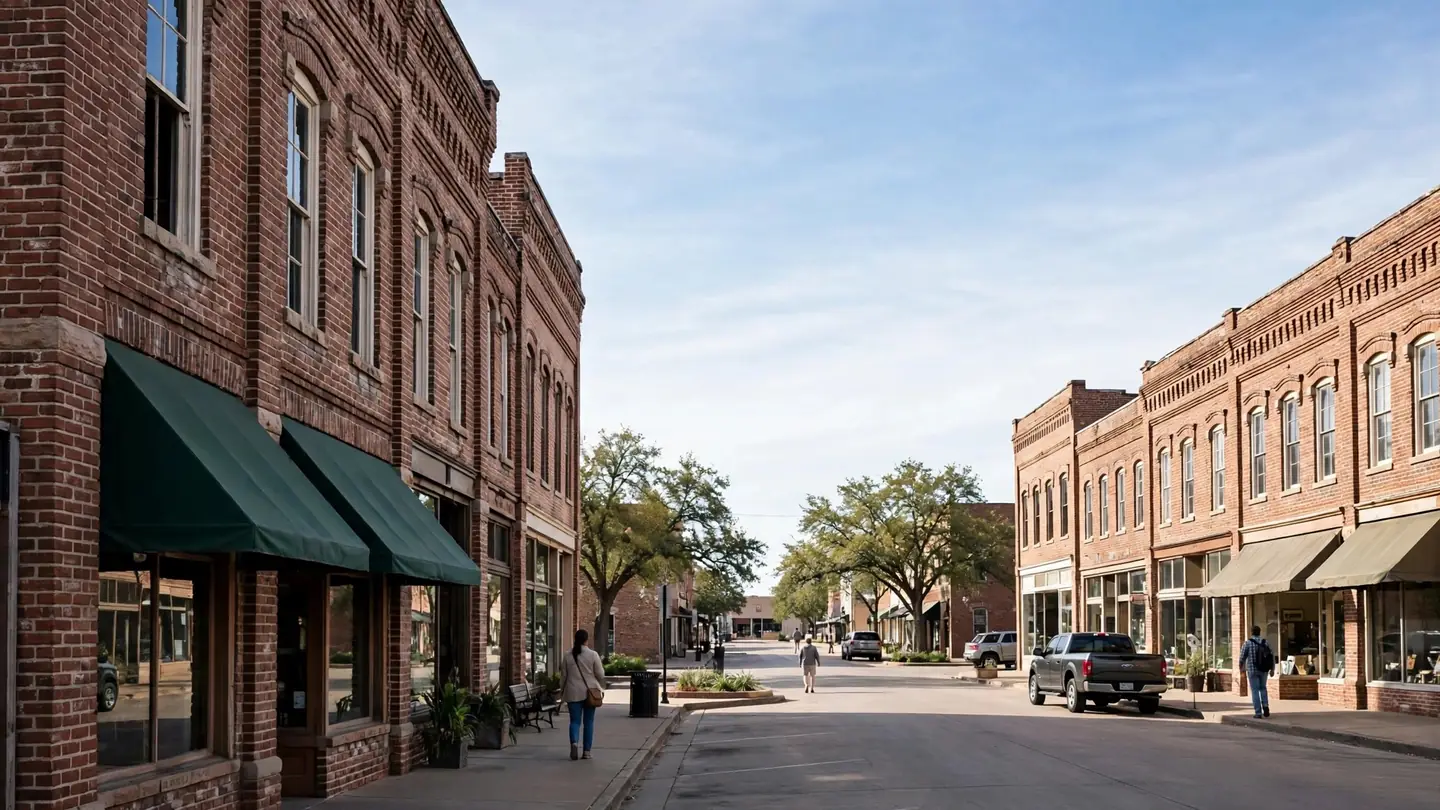
Mansfield began in the 1850s when Ralph Man and Julian Feild built a grist mill that drew farmers from across the area. The town that grew around it took its name from the two founders [1]. The railroad arrived later in the century, and by the 1890s Main Street had the brick commercial blocks that still give downtown its character.
Several of those buildings survive. The McKnight Building, built in 1895 as a lodge hall and store, now holds the Mansfield Historical Museum and Heritage Center [2], and other Main Street buildings date from the same decade. Around them, residential streets were filled in over the following decades with frame houses, bungalows and, after the Second World War, ranch homes.
For water damage, that history matters. A building from the 1890s has thick masonry walls, wood floors on joists, plaster finishes and plumbing that has been replaced, patched and rerouted many times. A house from the 1920s may sit on piers over a crawlspace rather than on a slab. Both need a different approach from the newer subdivisions that make up most of Mansfield.
Local problems
Water problems common in older downtown buildings
Leaks from upper floors
Apartments and offices above Main Street shops have bathrooms and kitchens directly over retail space. A small leak upstairs can stain a pressed-tin or plaster ceiling below.
Roof and parapet leaks
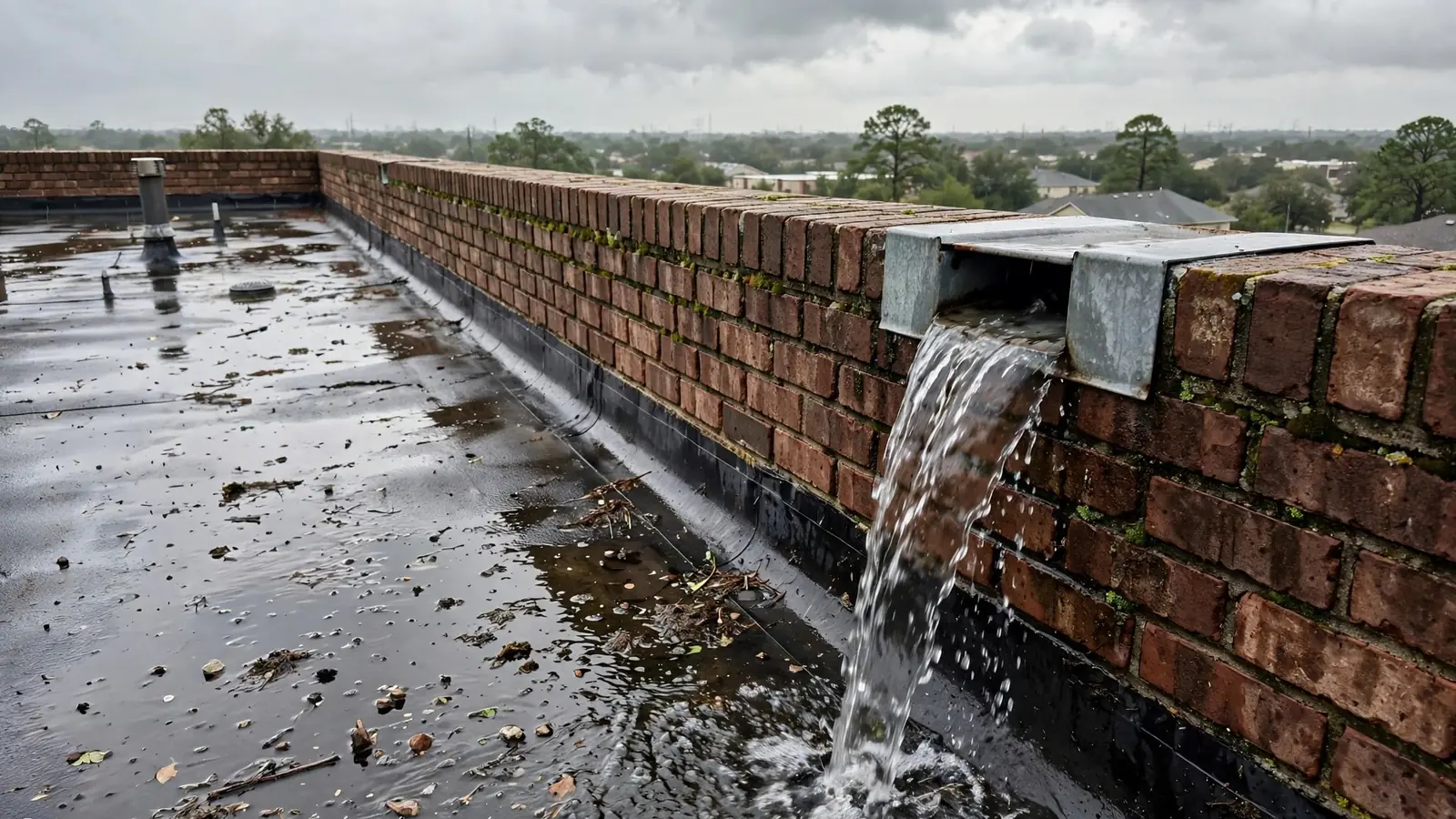
Flat roofs behind brick parapets drain through scuppers and internal drains. A clogged drain can pond water and push it through the roof membrane or down the inside of the wall.
Masonry wicking
Old brick and mortar absorb rain. Water can travel through the wall and appear as damp plaster, flaking paint or white salt deposits inside.
Crawlspace water
Houses on piers can collect water under the floor from plumbing leaks or poor drainage, which raises humidity and rots sill plates and joists.
Old drain lines
Cast-iron and clay sewer pipes in older homes are more prone to roots and cracks, and backups often show first in a low bathtub.
Patched plumbing
Decades of repairs leave mixed pipe materials and old connections that can fail without warning.
Old materials
Why plaster and old wood need a gentler approach
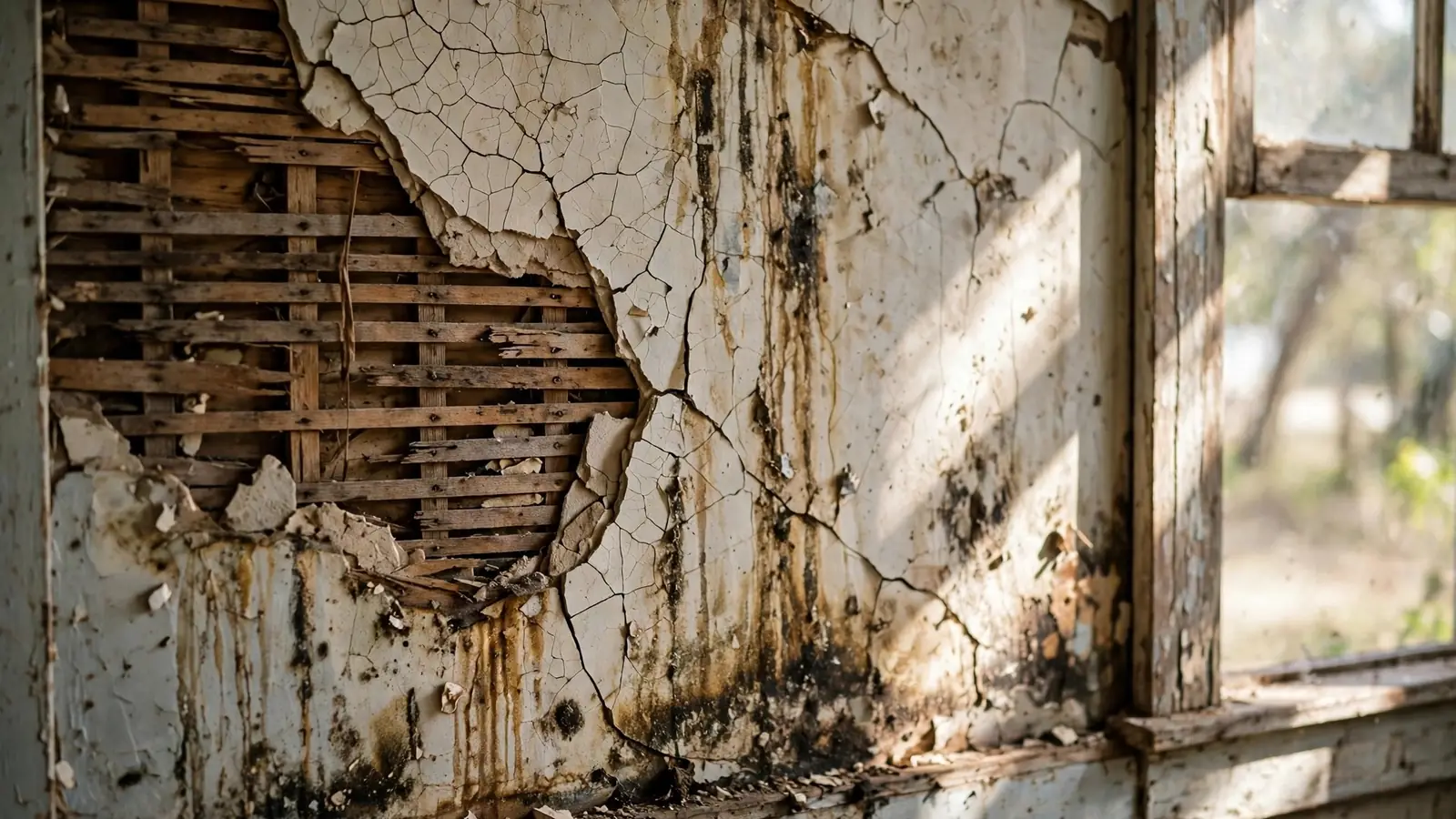
Plaster on wood lath was the standard interior finish before drywall. It is dense, heavy and holds moisture longer than drywall, but it is also more forgiving: plaster that has been wet with clean water can often be dried and kept, while drywall in the same situation would be cut out. A contractor who knows older buildings will try drying first and save cutting for areas where readings do not come down or the plaster has come loose from the lath.
Old-growth wood floors and trim are similar. Heart pine and oak from a century ago are dense and stable. They can cup when wet, but slow, controlled drying with floor mats and careful dehumidification often brings them back. Fast, hot drying can crack them. Patience is the rule.
Before any plaster, paint or old flooring is disturbed, the contractor should consider what it might contain. Paint applied before 1978 may contain lead, and some older flooring, adhesives and textures can contain asbestos [3][4]. Testing before cutting or sanding protects you and the crew.
Assessment
How water damage is assessed in a historic building
- 1
Find the path, not just the stain
In an old building water can travel along beams, inside masonry or across a ceiling before it appears. The contractor traces it back to the source.
- 2
Check the roof and parapets
For Main Street buildings, roof drains, scuppers and parapet caps are checked early, especially after storms.
- 3
Read the masonry and plaster
Moisture meters suited to dense materials map how far water has spread through plaster and brick.
- 4
Look under the floor
In pier-and-beam houses the crawlspace is inspected for standing water, wet insulation and damp joists.
- 5
Test before removing
Suspect paint, flooring or texture is tested for lead or asbestos before anything is disturbed.
- 6
Record original features
Trim, doors, pressed-tin ceilings and other features are photographed and, if they must come out, labeled for reinstallation.
Materials
Old materials and how they usually respond to water
| Material | Usual approach | Caution |
|---|---|---|
| Lime or gypsum plaster on lath | Dry in place where it is still bonded | Loose or sagging plaster may need careful removal |
| Old-growth hardwood floors | Slow drying with floor mats | Avoid high heat that can crack boards |
| Brick and mortar walls | Dry from the inside, address the exterior source | Salts may bloom as the wall dries |
| Pressed-tin ceilings | Remove panels if water is trapped above | Panels can rust if left wet |
| Original millwork | Remove carefully and dry slowly, or dry in place | Label pieces if removed |
| Crawlspace framing | Dry with air movement and dehumidification under the floor | Check sill plates for rot |
Foundations
Pier-and-beam houses near downtown
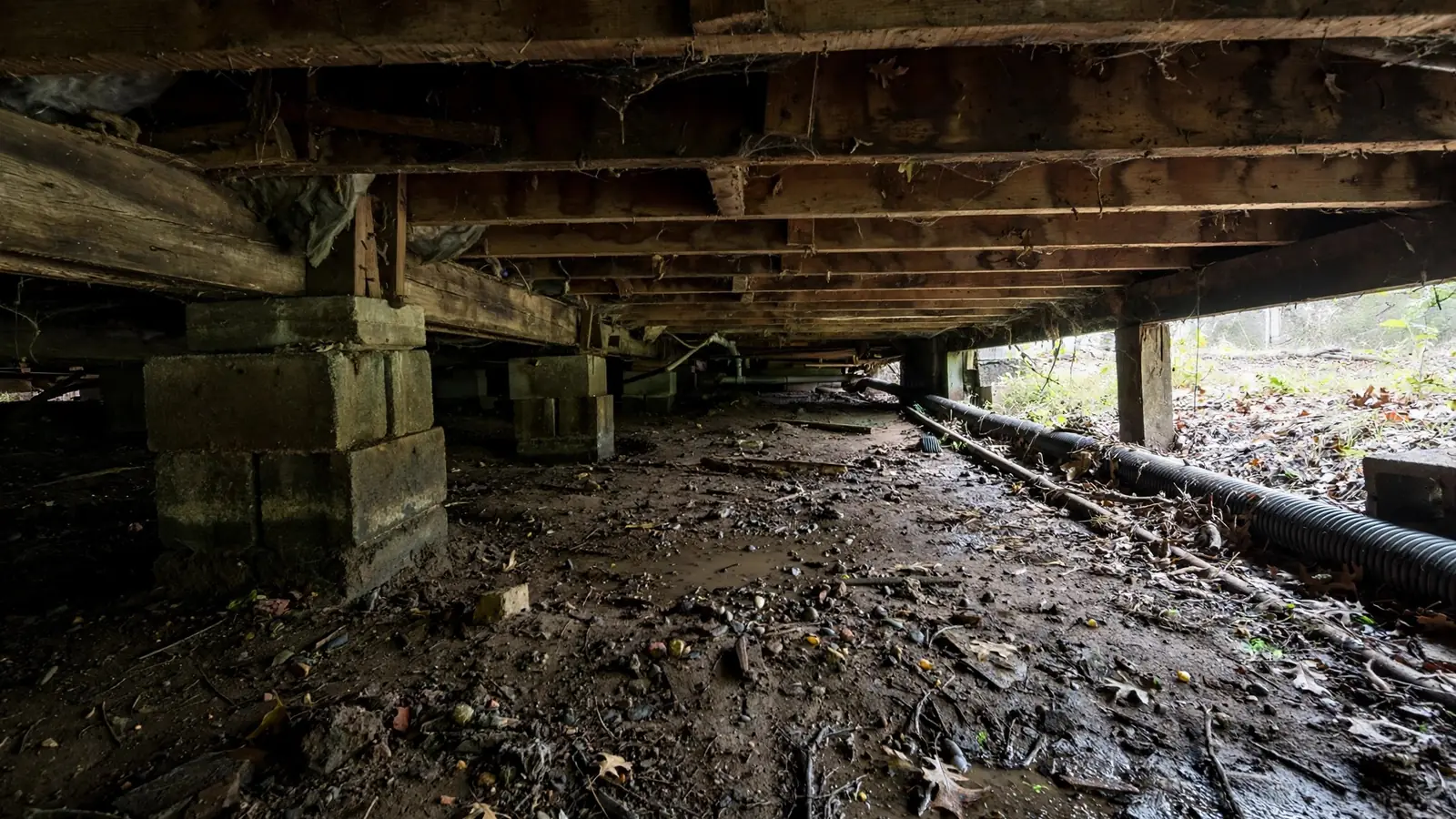
Many of the older houses around downtown Mansfield were built on piers with a crawlspace beneath, rather than on a slab. That changes the job. Water that leaks through the floor runs down into the crawlspace, where it can pool on the soil and keep the floor framing damp for weeks if nothing is done.
Drying a pier-and-beam house means drying both sides of the floor. Air movers and dehumidifiers work in the rooms above, while the crawlspace may need its own equipment, removal of wet insulation and, if water is standing, pumping. Vents and access doors are managed so humid summer air is not simply drawn under the house.
The good news is that wood floors over a crawlspace often dry faster than floors glued to concrete, because air can reach the underside. The contractor will check joists and sill plates for rot or past termite damage while they are under there.
Main Street
Main Street businesses and upper floors
Most downtown storefronts are now shops, restaurants and offices, and some have living or office space upstairs. In these buildings a leak rarely stays in one space. A toilet supply line that fails in a second-floor apartment can soak the floor, run through the ceiling and land on the merchandise below. Shared walls mean a leak in one building can show up next door.
For business owners, the priority is protecting stock and getting the doors open again. That might mean drying the retail floor first while upstairs is opened up, or working early in the morning before customers arrive. The commercial restoration page on this site explains how that kind of phased work is usually planned.
Owners of historic buildings should also check with the City of Mansfield about any requirements that apply to exterior repairs or alterations downtown before rebuilding [5]. Interior drying and cleanup are usually not affected, but replacing windows, storefronts or masonry may be.
First steps
Downtown water sources and first steps
| Source | Where it shows | First step |
|---|---|---|
| Clogged roof drain or scupper | Ceiling stains on the top floor, damp parapet wall | Clear the drain if safe; call a roofer and a restorer |
| Upstairs bathroom leak | Stain on the ceiling of the shop below | Shut off water upstairs; protect stock below |
| Wind-driven rain through old windows | Damp sills, peeling paint under windows | Cover the window; dry the wall |
| Crawlspace plumbing leak | Soft floor, musty smell, high humidity | Shut off water; inspect under the floor |
| Sewer backup in an older home | Water rising in the tub or floor drain | Stop water use; call a plumber |
The job
How the work is done in an older downtown building
Cleanup starts the same as anywhere: stop the water, remove it and protect what is still dry. Where it differs is the care taken with what comes next. Instead of a standard flood cut at two feet, the contractor may remove only a baseboard and drill small holes behind it to dry a plaster wall. Instead of tearing out a cupped floor, they may lay drying mats and watch the readings for a week.
Masonry walls are dried from the inside with dehumidification, while the outside source, such as a failed gutter or open mortar joint, is fixed by the right trade. As brick dries, white mineral deposits called efflorescence may appear. They can usually be brushed off once the wall is dry.
Contents in older homes often include heirlooms, old photographs and papers. Tell the contractor about anything irreplaceable at the start, so it can be moved first and dried properly.
DIY vs pro
What homeowners can do in older houses
You can do a lot to limit damage while you wait: shut off the water, move furniture and rugs off wet floors, put foil under the legs of anything that cannot be moved, and open interior doors. If the floor is wood over a crawlspace, open the crawlspace access door so air can begin to move, but only if outdoor air is drier than the air under the house.
Leave plaster removal, crawlspace work and anything involving old paint or flooring to the contractor. Old materials can be heavy, fragile or hazardous, and insurers prefer to see damage before it is removed.
Your questions
Questions to ask about your downtown building
These questions help you understand how an older Mansfield building will be treated.
- Will you try drying plaster before removing it?A contractor familiar with older homes should be able to explain when plaster can stay.
- How will the wood floors be dried?Ask about floor mats, target readings and how heat will be controlled.
- Will you test before disturbing old materials?Testing for lead and asbestos should come before sanding, cutting or demolition.
- How will the crawlspace be handled?Find out whether equipment will run under the floor and what will happen to wet insulation.
The visit
A downtown visit from call to dry
- 1
Call
You explain the building, the water source and what is wet.
- 2
Walk-through
The contractor inspects the building, traces the water path and checks the roof or crawlspace.
- 3
Plan
A drying-first plan is explained, with any removal limited to what readings show is necessary.
- 4
Agreement
You agree the work with the contractor directly.
- 5
Drying and monitoring
Equipment runs with daily readings, especially on plaster and wood floors.
- 6
Hand-off
You receive records and photos and plan repairs with the right trades.
Prevention
Protecting an older Mansfield building from the next leak
Roof drains and scuppers on flat roofs should be checked before spring storms and after the fall leaf drop. Parapet caps and flashing are common leak points on old brick buildings. Keeping masonry pointed and gutters working keeps water out of the walls.
Inside, replace old rubber supply hoses and have a plumber look at any original galvanized or cast-iron piping. In a pier-and-beam house, make sure the ground under the house slopes away from the center and that downspouts drain well clear of the foundation.
Know where your shut-off valve is. In older houses it may be in an unexpected spot, sometimes under the house or at the meter by the street.
- Clear roof drains and scuppers
- Check parapet flashing
- Replace old supply hoses
- Find your shut-off valve
Weather
Storms, freezes and century-old buildings
Older downtown buildings were not built with modern weather barriers. Brick walls rely on their thickness and on sound mortar to shed rain, and wood windows rely on paint, putty and good sills. When a North Texas spring storm drives rain sideways for an hour, small gaps that have been fine for years can let water in all at once.
Freezes are another risk. Pipes in older houses often run through uninsulated crawlspaces and exterior walls, where cold reaches them first. During the February 2021 winter storm, pipes split across the state as temperatures stayed below freezing for days [7]. A house on piers with an open crawlspace is especially exposed. Insulating pipes under the floor and keeping crawlspace vents closed during hard freezes helps.
Summer brings the opposite problem: heat and humidity. Air conditioning added to older buildings decades after they were built can create condensation on ductwork in crawlspaces and attics, which drips onto insulation and ceilings. A musty smell on the first warm days of the year is worth checking.
Insurance
Insurance notes for older homes and buildings
Older buildings sometimes raise questions during a claim that newer homes do not: whether original materials can be matched, whether code upgrades are covered when old wiring or plumbing is disturbed, and how much of a pre-existing condition was involved. The answers depend on the policy.
Good records help. Photos of the original finishes before removal, testing results for lead or asbestos and a clear drying log all help your adjuster understand the building. The adjuster guide on this site has more on preparing for that conversation.
Equipment
Living with drying equipment in an older house
Older houses are often smaller and have fewer outlets than new ones, and their wiring may not suit several air movers and dehumidifiers running at once. The contractor will check which circuits can carry the load and may run equipment from more than one circuit, or bring a distribution box. If breakers trip, tell them rather than resetting repeatedly.
Drying equipment also changes how the house feels. It is warm, noisy and dry, and old wood doors may stick or swell differently while it runs. That is normal and usually settles once the house returns to its usual conditions. Keeping the thermostat where the contractor asks and the doors closed helps the work finish sooner.
Related problems
Problems often found alongside water damage downtown
- Wood rotSill plates, joists and window sills that stayed damp for years can be soft. They may need a carpenter after drying.
- Termite damageOld damage is sometimes found under floors. A pest professional should assess active activity.
- Lead paint and asbestosTesting before disturbance is the safe approach in older buildings [3][4].
- Outdated wiringWater near old wiring should be checked by an electrician before power is restored.
- Mold in crawlspacesLong-term moisture under the house can grow mold on joists. Texas regulates larger mold jobs [6].
FAQ
Water damage questions for Historic Downtown Mansfield
Can wet plaster walls be saved?
Often, yes, if the plaster is still bonded to the lath and the water was clean. It dries slowly, and readings show when it is ready.
Do old hardwood floors have to be replaced after a leak?
Not always. Slow drying with floor mats often flattens cupped boards. Decisions about sanding or replacement wait until the wood is dry.
What if my house is on piers instead of a slab?
The crawlspace is dried as well as the rooms above. Wet insulation under the floor is often removed.
Will drying damage historic features?
Careful, slower drying is used to protect plaster, millwork and wood floors. Ask the contractor how they plan to protect original features.
Do I need city approval to repair a historic building?
Interior cleanup usually does not, but exterior changes downtown may have requirements. Check with the City of Mansfield [5].
Is old paint a concern during cleanup?
Paint from before 1978 may contain lead. Testing before sanding or cutting is recommended [3].
Can a downtown business call after closing time?
Yes. Calls are answered 24/7 and connect you to an independent local contractor.
Who does the restoration work?
An independent contractor. This site is a call-in referral service.
Sources and citations
- [1]Orchard: Mansfield, TX neighborhood guide (history)
- [2]DowntownTX: 102 N Main St, Mansfield (McKnight Building, 1895)
- [3]EPA: Lead in the home
- [4]EPA: Asbestos in your home
- [5]City of Mansfield, Texas
- [6]TDLR: Mold Assessors and Remediators
- [7]Wikipedia: February 2021 North American winter storm
- [8]Wikipedia: Mansfield, Texas
- [9]IICRC S500 Standard for Professional Water Damage Restoration