

Key facts: Rockwood
- Rockwood in Mansfield includes single-story homes built by Coventry Homes in 2024 [1].
- New concrete slabs release moisture for months as they cure, which affects how moisture readings are interpreted after a leak.
- The IICRC S500 approach compares wet materials with unaffected materials of the same type in the same home [2].
- Drying within 24 to 48 hours helps prevent mold on wet materials [3].
Covered area
Covered area
Calls from Rockwood can be connected to an independent restoration contractor serving Mansfield.
- ZIP 76063The Rockwood section of Mansfield and nearby new-construction streets.
- HousingSingle-story homes on slabs, completed from 2024 onward.
- Stage of lifeMost homes are in their first or second year, with new landscaping and irrigation.
About the area
A neighborhood in its first years
Rockwood is part of Mansfield's continuing growth, with new single-story homes completed in 2024 and since [1]. The streets are fresh, trees are young and many families are still settling in. Nearly every system in these houses, from the roof to the water heater, is in its first years of service.
That changes what goes wrong. Old-house problems like corroded pipes, failing water heaters and worn roofs are unlikely. New-house problems take their place: connections that were not fully tightened, appliances installed during a busy move, irrigation systems running for the first time and yards that have not yet settled into their final grades.
Single-story layouts also matter. Without a second floor, there are no upstairs laundry rooms or bathrooms to leak through ceilings. Water damage here tends to stay on one level and spread across the slab, under flooring and into walls, rather than coming from above, except where attic equipment is involved.
Local problems
First-year leak sources in a new single-story home
Washer connections on moving day
Hoses connected in a hurry can be cross-threaded or loose. The first few loads may be fine before a leak starts.
Refrigerator ice maker lines
Lines kinked or loosened when the refrigerator is pushed into place leak slowly behind it.
Toilet and sink supply fittings
Compression fittings may loosen as the house settles and the plumbing warms and cools through its first seasons.
Irrigation against the slab
A new sprinkler system set to run long and often to grow in sod can wet the slab edge and brick daily.
Attic HVAC condensate
The first full summer is when condensate drains get tested; a missing trap or clog can overflow onto a ceiling.
Exterior penetrations
Hose bibs, dryer vents and other wall openings that were not sealed well can let rain in during the first storms.
Fresh slabs
New slabs and moisture readings
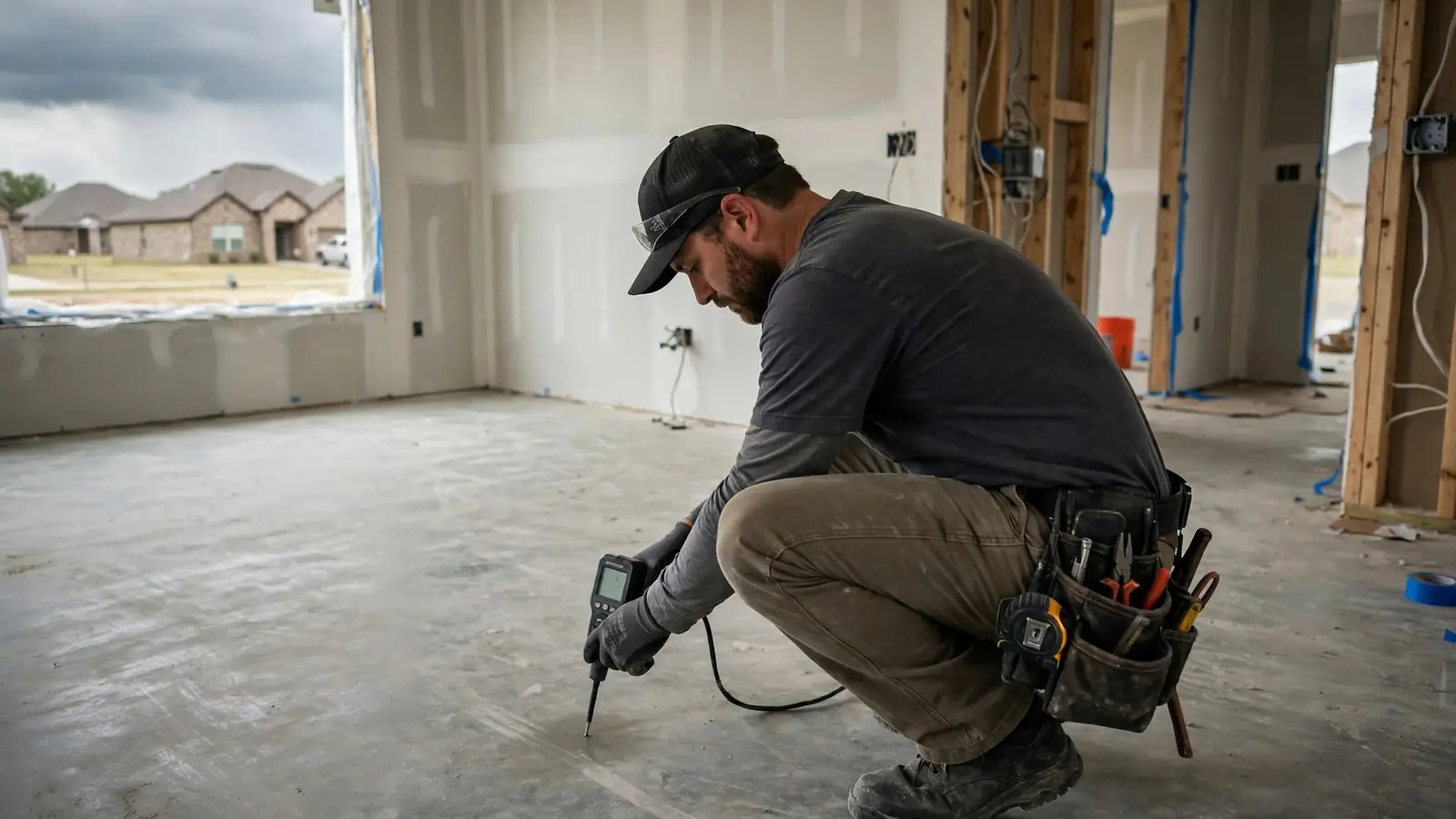
Concrete is mixed with a lot of water, and a new slab gives up that water slowly as it cures, over many months. Builders let slabs dry before laying floors, but even after move-in a young slab can still read higher than an older one. That matters after a leak, because the contractor needs to know what normal looks like in your house.
Following the IICRC S500 approach, the contractor reads unaffected areas of the same floor elsewhere in the house to set the dry standard [2]. In a new home, that comparison is especially important: it prevents mistaking normal curing moisture for leak damage, and it avoids stopping the drying too early.
If you notice a damp smell or condensation under area rugs in a very new home with no visible leak, it may be curing moisture rather than a plumbing problem. A moisture reading tells the difference.
Irrigation
New lawns, sprinklers and the slab edge
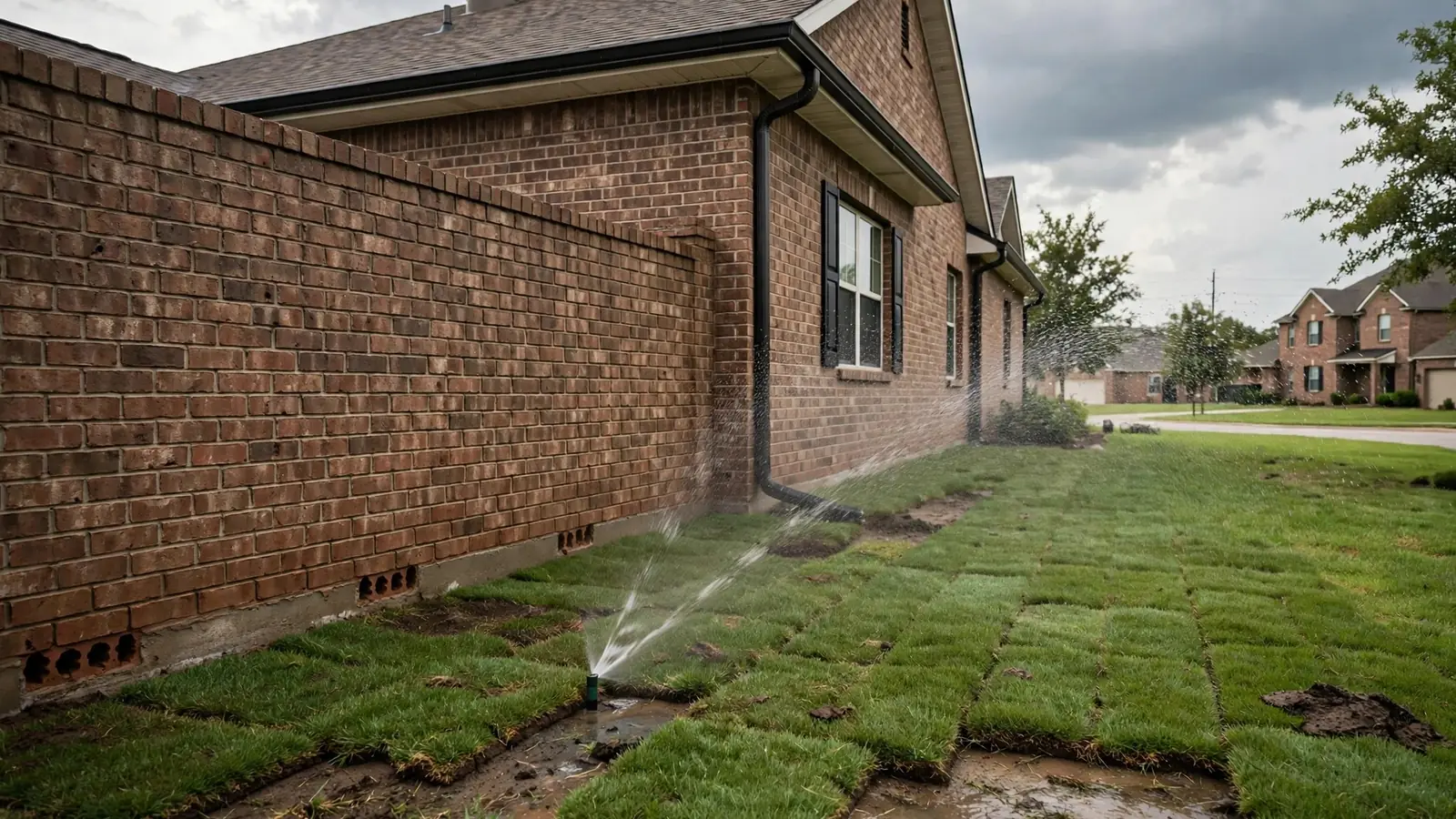
Fresh sod needs a lot of water in its first weeks, and new irrigation systems are often set to run daily or even twice a day. That is fine for the grass, but heads that spray onto brick, windows or the slab edge, or zones that run long enough to pool against the house, can push water into walls and under door thresholds.
Once the lawn is established, adjust the timer to a normal schedule and aim heads away from the house. Walk the yard during a watering cycle in the first month and look for spray hitting walls or puddles near the foundation.
Yards in a new neighborhood also settle. Soil backfilled against a new slab can sink, creating a low spot that holds water next to the house. Topping up and regrading in the first year keeps water moving away.
Assessment
How water damage is assessed in a brand-new home
- 1
Find the source
Appliance line, fitting, irrigation, attic equipment or rain entry.
- 2
Set the dry standard
Readings from unaffected areas account for normal curing moisture in a new slab.
- 3
Map the wet area
Meters trace water under flooring and up into drywall.
- 4
Check behind appliances
Washer, refrigerator and dishwasher connections are inspected.
- 5
Look at the exterior
Sprinkler spray, grading and wall penetrations near the wet area are checked.
- 6
Document for the builder
Photos, readings and the cause are recorded in a form useful for a warranty claim.
Diagnosis
Common sources and handling in new homes
| Source | How it shows | Usual handling |
|---|---|---|
| Washer hose | Wet laundry floor spreading to hall or kitchen | Fix connection; extract; dry floor and wall bottoms |
| Refrigerator line | Damp floor and cabinet near the refrigerator | Replace line; dry floor and cabinet |
| Toilet supply | Wet bathroom floor and baseboard | Tighten or replace; dry |
| Sprinkler spray | Damp baseboard on an exterior wall | Adjust heads; dry wall |
| Attic condensate | Ceiling stain under the air handler | Clear or fix drain; dry ceiling and insulation |
| Rain at a wall opening | Wet wall near a hose bib or vent | Seal opening; dry wall cavity |
Floors and cabinets
New floors, new cabinets
Brand-new floors and cabinets are among the most frustrating things to see wet. Vinyl plank, a common choice in new homes, floats over the slab and traps water underneath. The usual fix is to lift the planks in the wet area, dry the slab and reinstall them if the edges are undamaged.
Carpet in bedrooms usually dries well after a clean-water leak, though the pad may need replacing. New cabinets made from particleboard or MDF swell if their bases sit in water, so getting water out from under them quickly matters. Removing the toe kick lets air reach the floor under the cabinet.
If a new material does need replacing, the builder may be able to match it, which is another reason to involve them early.
Warranty
The warranty in the first year
Most new homes come with a builder warranty that is broadest in the first year, often covering workmanship and some materials. A leak caused by a construction or installation defect in that period may be the builder's responsibility. Check the documents you received at closing for what is covered and how to report it.
Appliance warranties are separate. A leak from a refrigerator's internal water line may fall under the appliance maker's warranty rather than the builder's. A leak from the line connecting the appliance to the house may depend on who installed it.
The job
How cleanup and drying usually go
For most first-year leaks, the water is clean and caught relatively early. The contractor extracts water, lifts plank flooring or pad where needed, removes baseboards in the wet area and sets air movers and dehumidifiers. Drywall that reads wet above the baseboard line may get small holes behind the baseboard for cavity drying.
Drying is tracked daily against the dry standard for your home. Most leaks in single-story new homes dry in a few days.
DIY vs pro
What you can do
Learn where your shut-off valves are when you move in: the main, the water heater, each toilet and sink, the washer and the refrigerator line. Shut the nearest one when you see a leak.
Do not take apart fittings or appliances under warranty. Photograph, keep any failed part and let the builder or installer look at it, while drying starts.
The visit
From your call to a dry home
- 1
Call
You explain what leaked and how long ago, and mention if the home is under warranty.
- 2
Inspection
The contractor maps the damage and records the cause.
- 3
Plan and agreement
You agree the work directly with the contractor.
- 4
Drying
Equipment runs with daily readings.
- 5
Records
Notes and photos are shared for your builder and insurer.
- 6
Repairs
Flooring, baseboards and drywall are restored, sometimes through the builder.
Prevention
Habits that prevent first-year leaks
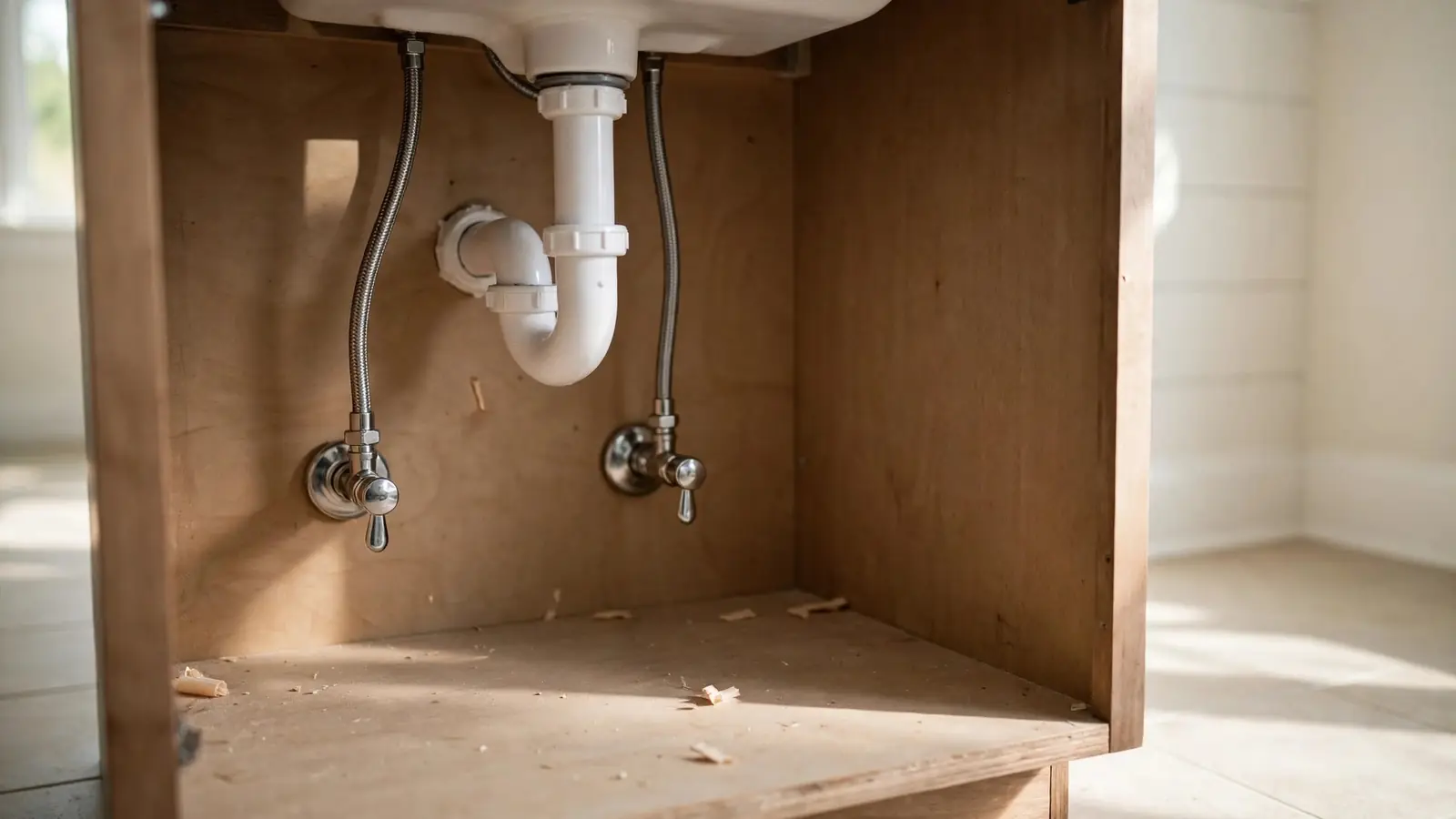
In your first month, look under every sink, behind each toilet and behind the refrigerator and washer. Feel for damp, look for drips and check the cabinet floors.
Set the irrigation to the schedule your new lawn needs, then cut it back once the sod is established. Keep heads aimed away from the house.
Before your first summer, check that the HVAC condensate line drains freely outside. Before your first winter, cover outdoor faucets and know where the main shut-off is.
- Check under sinks in the first month
- Cut back irrigation once sod is established
- Test the HVAC condensate drain
- Cover outdoor faucets before winter
Calendar
First-year calendar
| Month | What to check |
|---|---|
| Move-in | Locate shut-offs; check appliance connections |
| Month 1 | Inspect under sinks and around toilets; watch irrigation spray |
| Month 3 | Adjust irrigation as sod roots; check grading |
| First summer | HVAC condensate line and attic pan |
| First winter | Outdoor faucets covered; insulation around exposed pipes |
| Month 11 | List any concerns for the builder before the first-year warranty ends |
Moving day
Moving-day water checklist
Most first-year leaks start in the first weeks. A quick check on moving day catches many of them.
- WasherHand-tighten hoses, then a quarter turn more; run a short empty cycle and watch the connections.
- RefrigeratorCheck the ice maker line is not kinked when the fridge is pushed back; look behind it the next day.
- DishwasherRun a cycle while you are home and check under the sink for drips at the drain connection.
- Toilets and sinksFlush each toilet and run each tap, then look at the supply valves underneath.
- Water heaterFind its shut-off valve and check the drain pan or floor beneath it.
- IrrigationFind the controller and backflow valve; note the zone schedule the builder set.
Attics
What is above a single-story ceiling
In a one-story house, the attic sits directly over every room. It usually holds the air handler and ductwork, and sometimes the water heater. Blown insulation lies on top of the ceiling drywall. Anything that leaks in the attic lands on that insulation, soaks it and then shows as a stain on the ceiling.
Because the attic covers the whole house, a leak above one room can travel along a ceiling joist and appear somewhere else. The contractor traces it from the attic side. Wet blown insulation is usually removed so the drywall can dry, then replaced once the ceiling is dry.
Avoid walking in the attic except on the walkway or joists. A foot through the ceiling turns a small leak into a bigger repair.
Bathrooms
Bathrooms in a brand-new house
New showers and tubs are some of the most carefully built parts of a home, but they are also where small mistakes hide. A shower valve that was not fully sealed behind the wall, a drain gasket that shifted during tiling or a gap in the caulk where the tub meets the floor can each let water out a little at a time. Because the bathroom is on the slab, the water spreads under the floor and into the next room's carpet or baseboard rather than showing on a ceiling.
Watch for grout that stays dark long after a shower, a baseboard that swells outside the bathroom door or a musty smell in a closet that shares a wall with a shower. Any of these in the first year is worth reporting to the builder and having checked with a moisture meter.
Keep caulk lines intact around tubs and shower doors, and use the exhaust fan during and after showers so moisture leaves the room instead of settling on walls. Small habits like these keep a new bathroom dry for years.
Garages
Garages and driveways in a new build
New garages often sit only slightly lower than the house, with a short step at the door. Rain blown under the overhead door, a hose left running or a leaking water heater or tankless unit on the garage wall can send water toward that door. The weatherstripping under a new garage door may need adjusting before it seals well.
The driveway and the garage floor are new concrete too, and both will shed water toward the street if they were finished correctly. If water pools against the garage door after rain, raise it with the builder in the first year.
Freezes
The first hard freeze
New homes are built to current energy codes and are generally well insulated, but outdoor faucets, irrigation backflow assemblies and any pipes in exterior walls can still freeze in a hard North Texas cold snap. The 2021 winter storm showed how widely pipes can burst when temperatures stay below freezing for days [5].
Before the first freeze, cover outdoor faucets, follow the irrigation installer's instructions for protecting the backflow valve and know how to shut off the main. After a freeze, check the garage walls and any room with plumbing on an outside wall.
Yard changes
Fences, patios and changes after closing
Many new homeowners add fences, patios, pergolas, flower beds or playsets in their first year. Each can change how water drains across the lot. A patio poured with a slight slope toward the house, a flower bed built up against the brick or a fence that blocks a drainage swale can all send water to the wrong place.
Before adding hardscape, look at the original grading plan if you have one, and keep soil and mulch several inches below the brick line. After any change, watch the yard during the next heavy rain.
Records
Records to keep from day one
Keep a folder with your closing documents, builder warranty, appliance manuals and receipts, and the contact details for the builder's warranty department. Add photos of each room when the house is new.
If a leak happens, those records make it simple to show what the house looked like before, what failed and who installed it. Add the contractor's drying log and photos after any water damage.
New owners
Your first water loss in a new neighborhood
For many Rockwood families, a first-year leak is also their first experience with water damage in any home. The process can feel confusing: a plumber, a restoration contractor, the builder's warranty team and an insurer may all be involved at once. Keep one list of who you have spoken to, when and what they said, and ask each one what they need from you next.
Neighbors on the same street often have the same builder, plumbing layout and appliance packages. If a particular fitting or connection failed in your home, it is worth mentioning to neighbors so they can check theirs. A quiet word on the street can prevent the same leak in the house next door.
Once the repair is done, add the cause and the fix to your home records. If the same problem appears again later in the warranty period, that history will matter.
FAQ
Rockwood water damage questions
My house is less than a year old. Who pays for leak repairs?
If a construction defect caused the leak, your builder warranty may cover it. Check your documents and report it in writing.
Why does my new slab read damp?
New concrete keeps releasing moisture for months. Comparing with unaffected areas tells normal curing moisture from a leak.
Can I wait for the builder before drying?
It is better not to. Photograph the damage and start drying to prevent mold, while reporting to the builder.
Can my sprinklers cause water damage inside?
Yes, if heads spray the house or zones pool against the slab. Adjust heads and timers.
Do vinyl plank floors have to be replaced after a leak?
Often not. Planks can be lifted, the slab dried and the planks reinstalled if undamaged.
How long does drying take in a single-story home?
Usually a few days for a clean-water leak.
Is the line open when a Rockwood leak is found at night?
Yes. Rockwood homeowners can call any hour of the day or night.
Is the contractor connected to my builder?
No. The contractor is an independent local business, separate from your builder and from this site.