

Key facts: South Pointe
- South Pointe is a master-planned Mansfield community with nine parks and two stocked fishing lakes [1].
- Several builders have active home series in South Pointe, with new homes still being added [2].
- The IICRC S500 standard sets drying goals by comparing wet materials with unaffected ones in the same home [3].
- Drywall, pad and cabinet bases that stay damp beyond a day or two give mold a foothold, which is why drying starts quickly [4].
Covered area
Covered area
Calls from South Pointe can be connected to an independent restoration contractor serving Mansfield.
- ZIP 76063The South Pointe community and its builder sections in Mansfield.
- HousingSingle-story and two-story homes on slabs, built from the 2010s to today, many with upstairs laundry or game rooms.
- Community featuresParks, trails and two stocked fishing lakes that also form part of the community's drainage design.
About the area
A newer part of Mansfield
South Pointe has been built out in phases, with several builders offering homes on different lot sizes [2]. Its marketing highlights nine parks and two stocked fishing lakes inside the community [1]. Streets are newer, drainage was engineered as part of the plan, and most homes are a few years old at most.
That makes water damage here different from older Mansfield neighborhoods. Roofs, water heaters and supply lines are young, so age-related failures are rarer. Instead, calls tend to come from installation issues, appliance connections, upstairs fixtures and the first heavy storms a new lot has seen.
New homes also come with builder warranties, which can matter when a leak traces back to how something was built. Knowing what your warranty covers, and reporting a problem the right way, is part of handling water damage in South Pointe.
Local problems
Where water damage starts in newer homes
Upstairs laundry rooms
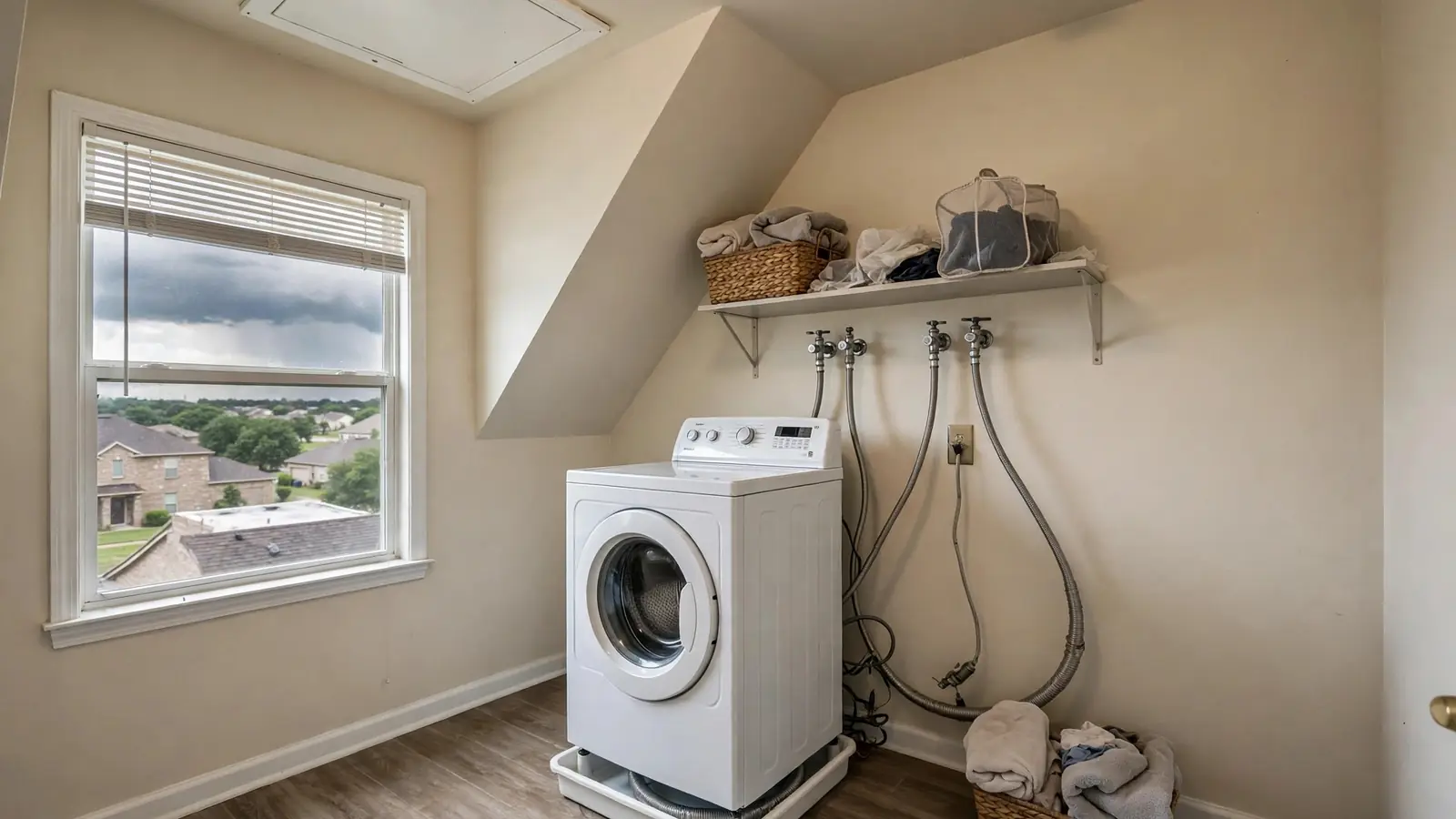
Many newer plans put the washer upstairs near the bedrooms. A hose or drain failure sends water through the floor system into the rooms below.
Refrigerator and ice maker lines
Large kitchens with built-in or island layouts hide water lines that can be kinked or loosened during installation or move-in.
Loose fittings
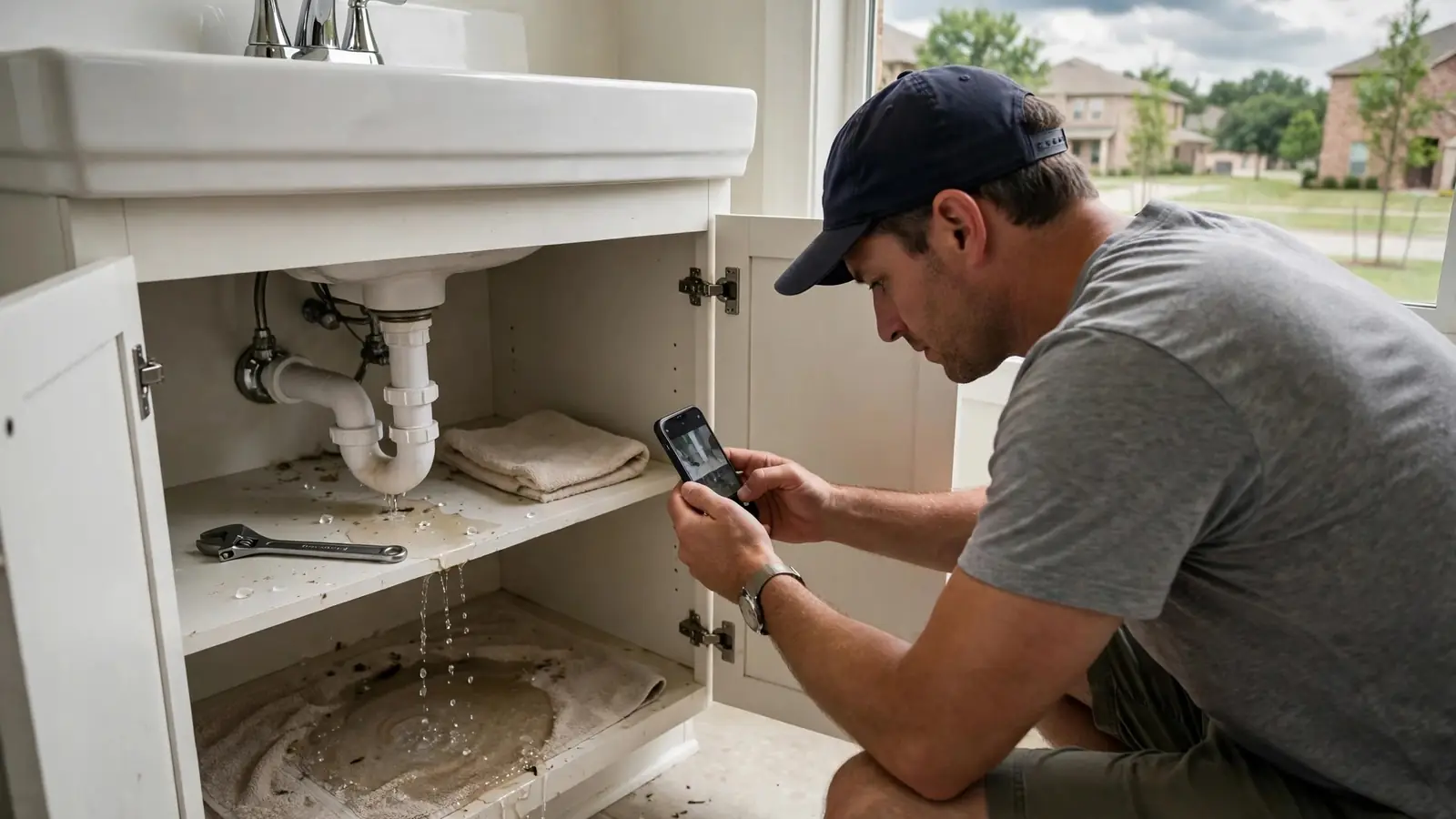
A fitting under a sink or behind a toilet that was not fully tightened may drip from the first day and only show weeks later.
Shower pans and valves
New showers can leak at the pan, drain or valve if something was missed during construction.
Attic water heaters and HVAC
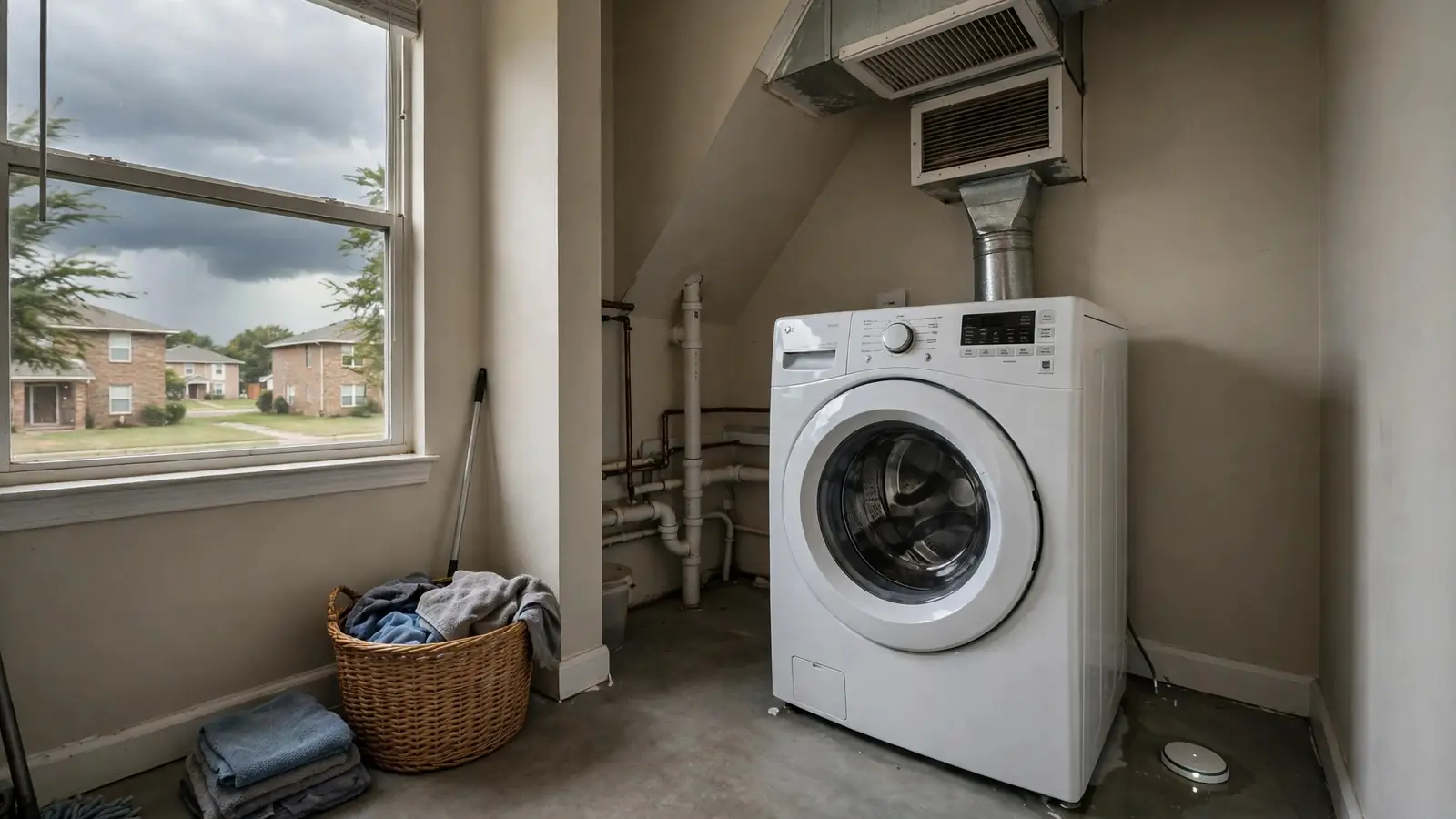
Some newer homes place water heaters or HVAC units in the attic, where a leak goes straight into the ceiling.
First-storm drainage
Freshly graded lots and new landscaping can send runoff toward the slab until the yard settles and drains are adjusted.
Second floors
Upstairs laundry and second-floor leaks
Upstairs laundry rooms are convenient, and they move the risk. If a supply hose bursts or the drain hose slips out of its standpipe, water spreads across the laundry floor, runs under the door and soaks into the subfloor. From there it travels along joists and drips through light fixtures and seams in the ceiling below.
A washer pan with a drain connection catches small leaks, but a burst hose can overwhelm it. A water sensor near the washer that alerts your phone, and an automatic shut-off valve, give you the best chance of catching a failure fast.
When water comes through a downstairs ceiling, turn off the washer valves or the main, turn off power to light fixtures in the wet ceiling and keep people out from underneath. Drying usually means opening part of the ceiling below to dry the joists and subfloor from underneath.
Warranties
Builder warranties and water damage
Most new homes come with a builder warranty that covers some workmanship and system defects for set periods after closing. If a leak is caused by a construction defect, such as a fitting that was never tightened or a shower pan installed incorrectly, the builder may be responsible for the repair. Read your warranty documents to see what is covered and how claims must be made.
Report the problem to the builder in writing, following the warranty's process, and keep a copy. At the same time, do not let the house sit wet. Most warranties and insurance policies expect you to prevent further damage, which means stopping the water and starting drying quickly. Photograph everything before work starts, keep any failed part and ask the plumber or contractor to note the cause.
Your homeowners insurance may also be involved. The adjuster guide on this site explains how to keep records that work for both the builder and the insurer.
Assessment
How water damage is assessed in a newer home
- 1
Identify the source
Appliance line, plumbing fitting, shower, laundry, attic equipment or outside drainage.
- 2
Save the evidence
A failed fitting, hose or part is kept for the builder or insurer.
- 3
Map both floors
Moisture readings track water from upstairs through ceilings and walls below.
- 4
Check floating floors
Vinyl plank and laminate are checked at seams and edges for water underneath.
- 5
Read the cabinets
Kitchen islands and built-ins are checked for water trapped beneath.
- 6
Record it all
Photos, readings and notes support both warranty and insurance claims.
Diagnosis
Common newer-home sources and handling
| Source | How it shows | Usual handling |
|---|---|---|
| Upstairs washer hose | Ceiling stain or drip below the laundry | Shut off; open ceiling below; dry floor system |
| Refrigerator line | Swollen island base, wet plank floor | Repair line; lift planks; dry slab and cabinets |
| Loose sink or toilet fitting | Damp cabinet floor, wet baseboard | Tighten or replace; dry cabinet and wall |
| Shower pan leak | Stain in room below or wet wall beside shower | Plumber repair; dry wall and ceiling |
| Attic water heater | Ceiling stain near the unit | Repair; remove wet insulation; dry ceiling |
| Yard runoff | Wet floor at a back door or garage | Adjust grading or drains; treat water as contaminated |
Floors
Vinyl plank floors and open plans
Luxury vinyl plank is a common floor in newer homes, often running through the kitchen, living and dining areas in one continuous span. It looks waterproof, and the planks themselves are, but the joints are not watertight and the floor floats over an underlayment on the slab. Water that gets under it spreads widely and cannot evaporate.
Drying usually means lifting the planks in the wet area so the slab and underlayment can dry, then reinstalling them if the locking edges are undamaged. Because the floor runs continuously through several rooms, the contractor may need to remove trim and work from a wall to reach the wet section.
Open floor plans also change how drying is set up. A wide, connected space means more air volume for dehumidifiers. Containment walls may be put up to focus equipment on the wet section.
Kitchens
Kitchen islands and large appliances
Kitchens in newer South Pointe plans are often the center of the house: a big island with a sink and dishwasher, a wide refrigerator with an ice and water dispenser, and sometimes a separate beverage fridge or pot filler. Each of those needs a water line, and several run under the island or through the cabinets where nobody looks.
A dishwasher drain loop that slips, a compression fitting on an ice maker line that was overtightened, or a plastic line kinked when the refrigerator was pushed back can all leak slowly. The first sign is often a vinyl plank floor that lifts at the seams near the island, or a cabinet base that feels soft.
When you move in, and any time an appliance is replaced, pull the refrigerator out a little and look behind it, and open the island cabinets to check the floor. A towel left dry on the cabinet floor is an easy way to notice a drip. If a leak does reach the floor, the contractor will check under the island and along the plank floor for water that spread out of sight.
Keep the appliance manuals and installation receipts. If a new appliance leaks because of how it was installed, those records help with the installer, the builder or the insurer.
Drainage
Lakes, parks and drainage
The lakes and green spaces in South Pointe are part of how the community handles storm water. Streets and lots are designed to move rain toward drainage channels and ponds. Most of the time this works well, and the lakes help slow runoff during storms.
Problems tend to be lot-level. New sod and beds may not yet drain as designed, downspouts may discharge too close to the slab, and fences or patios added after closing can change how water moves. The first big spring storm after move-in is a good time to watch where water goes around your house.
Homes beside a lake or channel should know whether they sit in a mapped flood zone. FEMA's Flood Map Service Center shows the official maps [5].
The job
How cleanup and drying are done
With a clean-water leak in a new home, much can often be dried in place. Drywall wet from below may need only baseboards removed and small holes for cavity drying. Ceilings below an upstairs leak may need a section opened. Vinyl plank and laminate are usually lifted so the slab can dry.
Daily readings track progress against unaffected materials in the same home, the approach set out in the IICRC S500 standard [3]. Most newer homes dry within a few days.
When the leak was caused by a construction defect, the contractor's notes on the cause, plus the failed part, become part of your warranty claim.
DIY vs pro
What homeowners can do
Find your main shut-off and the individual valves for the washer, toilets, sinks and refrigerator when you move in. Shut off the water at the nearest valve when you see a leak, turn off power to wet areas and move furniture and electronics.
Do not take apart warranty items yourself. Photograph the leak, keep the failed part and contact the builder through the warranty process, while getting drying started to prevent further damage.
The visit
From your call to a dry home
- 1
Call
You explain what leaked, where and whether the house is under builder warranty.
- 2
Inspection
The contractor finds the source, maps the wet area and photographs everything.
- 3
Plan
You hear what can be dried in place and what must be lifted or opened.
- 4
Agreement
You agree the work with the contractor directly.
- 5
Drying
Equipment runs with daily readings.
- 6
Records
You receive notes, photos and readings for your builder and insurer.
Prevention
Preventing leaks in a new home
Look under every sink, behind every toilet and behind the refrigerator during the first months in a new home. Many installation leaks show up early as small drips or damp cabinet floors. Report anything you find to the builder in writing.
Use leak sensors near the upstairs washer, water heater, refrigerator and under sinks. An automatic shut-off valve on the main supply can stop a burst hose within moments of detection.
Watch your yard in the first big storms, and keep downspouts and splash blocks in place so water moves away from the slab.
- Check under sinks in the first months
- Put sensors near the washer and water heater
- Consider an automatic shut-off valve
- Watch yard drainage in early storms
Checklist
First-year checklist for a new South Pointe home
| When | What to check |
|---|---|
| Move-in week | Locate all shut-off valves; check refrigerator and washer connections |
| First month | Look under sinks, around toilets and at shower seals |
| First big storm | Watch where water flows around the house; check doors |
| First summer | Check attic equipment drain lines and pans |
| Before warranty dates | Note any concerns and report them to the builder in writing |
Water heaters
Tankless and attic water heaters
Many newer homes use tankless water heaters mounted on a garage or exterior wall, or tank heaters placed in the attic to free up garage space. Tankless units hold little water, so they rarely cause a large flood, but their connections and relief valves can drip, and the condensate from high-efficiency models needs a working drain.
An attic tank is a different story. If it fails, the water has only one way to go: down through the ceiling. Attic heaters should sit in a pan with a drain line to the outside. Check that the pan is there, the drain is clear and nothing is stored in the pan. A leak sensor in the pan is a small addition that can save a ceiling.
Bonus rooms
Game rooms, media rooms and bonus spaces
Second-floor game rooms and media rooms are common in South Pointe floor plans. They often sit over the garage or the main living area and share walls with bathrooms or the laundry. Carpet in these rooms soaks up water from an adjoining bath quickly, and the room below may show the damage first.
Media rooms with built-in speakers, wiring and equipment racks add another layer. Electronics that got wet should be unplugged and checked before use. Low-voltage wiring in walls usually survives a clean-water leak once dried, but connections and equipment should be inspected.
Construction
Living near active construction
Parts of South Pointe are still being built. Construction nearby can change drainage for a while: lots being graded, silt fences, and street work can send runoff in new directions during storms. Mud and debris in storm drains can also slow drainage on a street.
If your yard starts holding water after construction begins next door, photograph it during a storm and raise it with the builder or the community's management. Fixing a drainage path early prevents water from reaching your slab or garage.
Smart protection
Smart sensors and automatic shut-offs
Newer homes are well suited to smart leak protection. Battery sensors placed under sinks, beside the washer and near the water heater send an alert to your phone when they detect water. Some connect to a valve on the main supply that closes automatically.
These systems turn many potential floods into small puddles. They are especially useful in homes with upstairs laundry or an attic water heater, and for families who travel. Test sensors twice a year and replace batteries as needed.
HOA
HOA rules and repairs
Master-planned communities like South Pointe usually have a homeowners association with rules on exterior changes, landscaping and sometimes contractor access. Interior water damage repairs normally do not need HOA approval, but exterior work such as regrading, new drains, fence changes or roof work may.
If water damage traces back to a common area, such as a drainage channel or shared landscaping, contact the HOA's management company and document what you see. Check your HOA documents before planning exterior fixes.
Related problems
Problems often linked to water damage here
- Mold under floating floorsWater trapped under vinyl plank can grow mold if not dried [4].
- Warranty disputesClear evidence of the cause helps resolve who is responsible.
- Cabinet swellingIsland and vanity bases can swell if water sits underneath.
- Larger mold jobsMold remediation above certain sizes in Texas involves TDLR-licensed professionals [6].
Two floors
Two-story drying in South Pointe floor plans
Many South Pointe homes stack bedrooms and a game room above the kitchen and family room. When water comes through the floor system, the drying plan has to reach three places: the upstairs floor covering, the space between the floors and the ceiling below. Contractors usually start by removing wet carpet pad upstairs and opening a section of the ceiling below so air can move through the joist space.
Cavity drying systems help where finished ceilings or decorative light fixtures make large openings undesirable. Readings are taken from both levels each day until they match the dry reference. Ask to see where the readings were taken so you know the space between the floors was checked, not just the rooms.
FAQ
South Pointe water damage questions
My house is new. Will the builder fix the water damage?
If the leak was caused by a construction defect covered by your warranty, the builder may be responsible. Check your warranty and report it in writing.
Should I wait for the builder before drying?
No. Stop the water, photograph everything and start drying to prevent further damage, while reporting to the builder.
Can vinyl plank floors be reinstalled after a leak?
Often, if the locking edges are undamaged. Planks are lifted, the slab is dried and they are put back.
Why is water coming through my downstairs ceiling?
Usually an upstairs laundry, bathroom or attic equipment leak. Shut off the source and the power to wet light fixtures.
Do the community lakes increase flood risk?
They are part of the drainage design. Check FEMA flood maps for your lot [5].
How long does drying take in a newer home?
Often a few days for clean-water leaks. Two-story leaks and water under plank floors can take longer.
Can I reach someone if a South Pointe leak starts late at night?
Yes. A call from South Pointe at any hour, weekends included, is answered and connected to an independent contractor.
Is the contractor connected to my builder?
No. Your call connects to an independent local contractor, not your builder.