
Key facts: Hidden moisture
- Moisture that stays in building materials can lead to mold growth; the EPA advises drying within 24 to 48 hours [1].
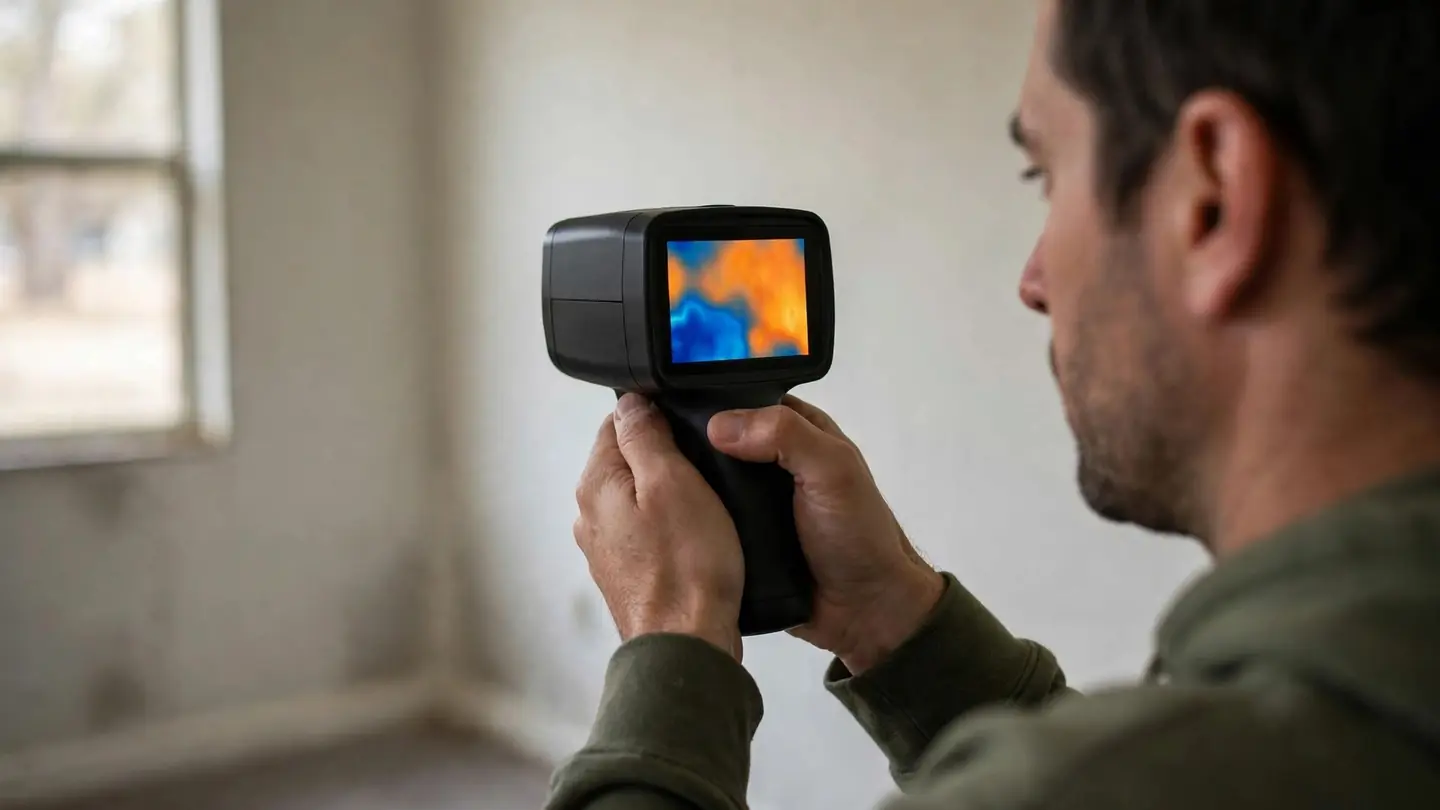
- Pinless and pin-type moisture meters and thermal imaging are standard tools for finding hidden water [2].
- A wall is considered dry when its readings match an unaffected wall of the same material, per the IICRC S500 approach [2].
- In Texas, mold remediation above certain sizes involves licensed professionals regulated by TDLR [3].
Warning signs
Clues that water is hiding
Musty smell in one spot
An earthy odor near a wall, cabinet or closet with no visible cause.
Paint bubbling or peeling
Moisture pushing through the wall surface lifts paint.
Baseboard swelling
Particleboard or MDF trim swells and splits at the bottom.
Soft drywall
Drywall that gives when pressed near the floor or around a tub.
Faint stain or tide line
A slightly darker band low on the wall or a ring on the ceiling.
Warped cabinet floor
The floor of a sink cabinet that bulges or feels soft.
Hiding places
Where moisture hides in Mansfield homes
Behind showers and tubs, water gets through cracked grout or failed caulk and soaks the wall cavity. Under kitchen and bathroom sinks, slow drips from supply lines or drains soak cabinet floors and the wall behind. Behind refrigerators and washers, fittings leak out of sight. Above ceilings, attic HVAC drain lines and roof leaks wet insulation that rests on the drywall.
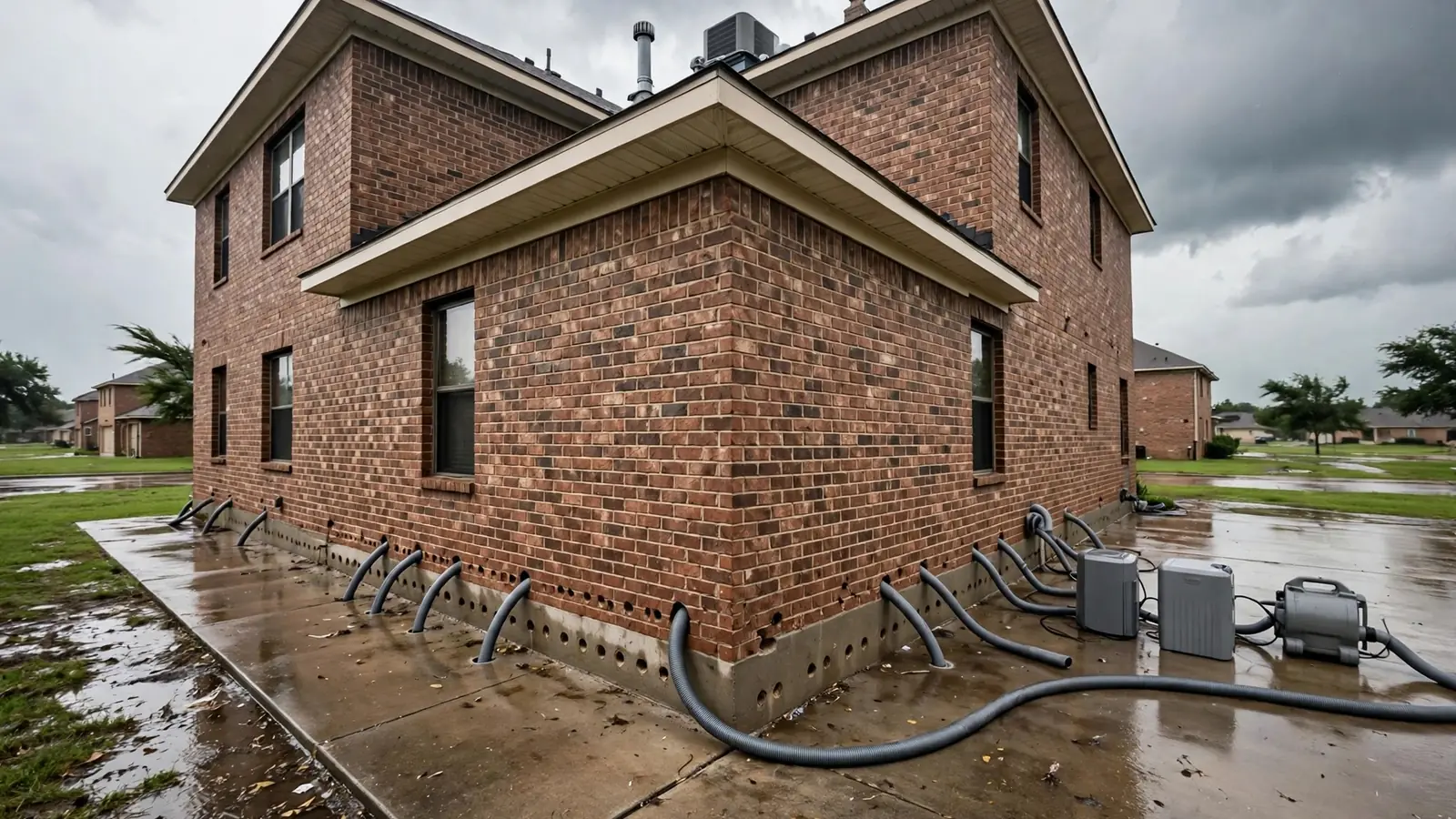
Exterior walls take on water from outside: wind-driven rain at windows, sprinkler spray against brick and soil graded toward the slab. Interior walls next to wet rooms wick water sideways and upward. In a slab home, water that spread under flooring rises into the bottom of every wall it touches.
Diagnosis
Hiding spot and likely source
| Clue | Likely source |
|---|---|
| Musty smell in a bathroom closet | Shower or tub leak in the shared wall |
| Swollen baseboard by the kitchen | Dishwasher or refrigerator line |
| Ceiling ring in summer only | Attic HVAC condensate |
| Damp wall under a window | Window frame leak or sprinkler spray |
| Soft cabinet floor under sink | Drain or supply line drip |
| Wet wall bottom with no plumbing nearby | Water under flooring from an adjoining room, or outdoor water at the slab edge |
Self-checks
Checks you can do yourself
You do not need special tools to start looking. Press gently on drywall near the floor around tubs, toilets and the kitchen sink; it should feel firm. Open sink cabinets and feel the cabinet floor and the back wall with your hand. Sniff in closets that share a wall with a bathroom. Look along baseboards with a flashlight held low, which shows swelling and paint bubbles clearly.
Basic moisture meters sold for home use can give a rough idea, but readings vary by material and model. Use one to compare a suspect area with a similar wall elsewhere in the house rather than trusting a single number. If a spot reads clearly higher than its twin, it is worth having a contractor take proper readings.